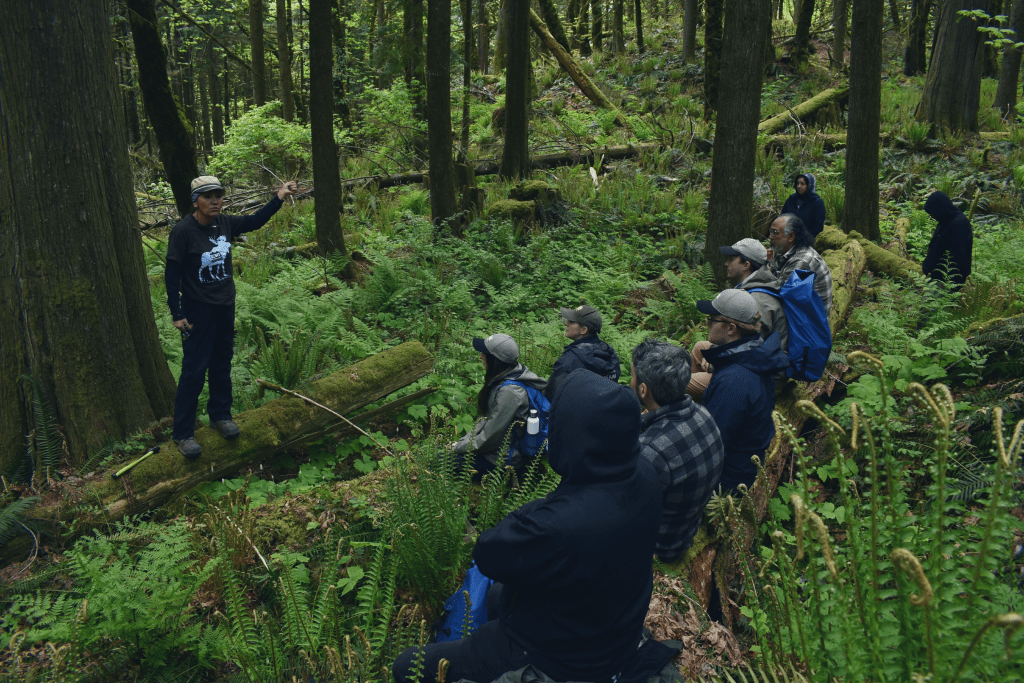
Throughout the spring and summer, the Wetlands Education Program partnered with the Stó:lō Research and Resource Management Centre, Chawathil First Nation, ʔaq’am First Nation, and members of the Ktunaxa Nation to deliver two Wetlandkeepers workshops rooted in place-based learning and cultural exchange.
As with all Wetlandkeepers workshops, the sessions began with classroom instruction on wetland types, functions, and stewardship tools. Participants were encouraged to share local knowledge and voice their concerns about wetland health. Many already held deep, generational relationships with the wetlands that shape their communities, bringing a rich foundation of insight and lived experience to the conversations.
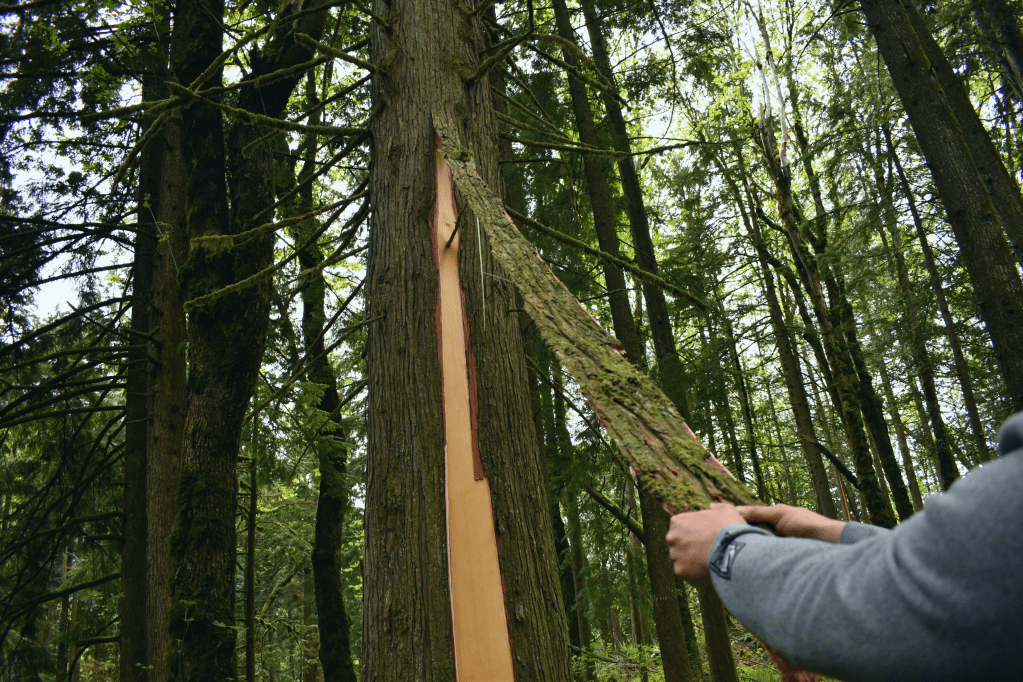
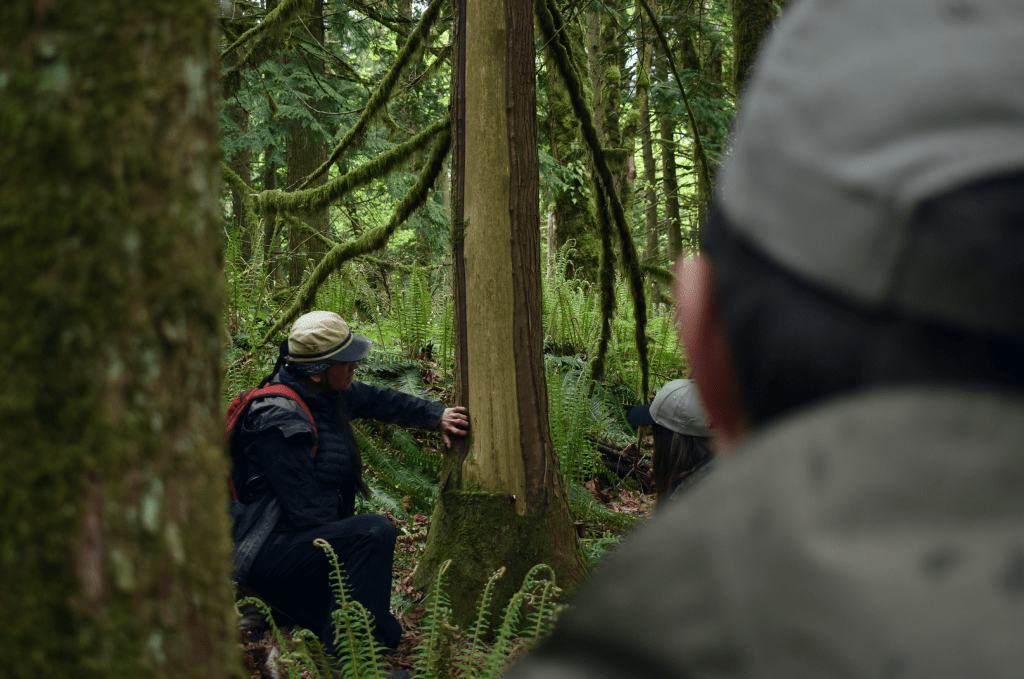
In May 2022, the workshop held with Chawathil First Nation included a guided plant walk led by Elder Yvette John. An archaeologist and expert in traditional plant use, Yvette shared stories and teachings based on over 30 years of experience. She highlighted the cultural and medicinal properties of native species like western red cedar bark, licorice ferns, and Oregon grape root. A highlight of the day was participating in traditional cedar stripping—a hands-on moment of learning and connection.
Later that evening, participants joined an online speaker session featuring Betty Rebellato and Sarah Sra of the Canadian Wildlife Federation, and Monica Pearson from the B.C. Ministry of Forests. Betty, the National Fish Passage Program Improvement Coordinator, spoke about her work leading barrier remediation projects across B.C. Sarah, a Conservation Planner, discussed building partnerships with Indigenous Nations through the B.C. Fish Passage Restoration Initiative. Monica closed the evening with a presentation on wetland mapping technology and its role in improving wetland conservation across the province.
Day two brought participants to Thacker Regional Park on a grey, drizzly morning. Led by wetlands specialist Neil Fletcher, the group followed a decommissioned stretch of the Kettle Valley Railway to reach Thacker Marsh. Framed by snowcapped peaks, the marsh revealed itself as a thriving wetland system—alive with red-winged blackbirds, darting tree swallows, and lush spring growth.
With field guides in hand, participants identified plant species, learned to distinguish wetland types, and practiced ecological health assessments beneath the conifer canopy. By mid-afternoon, the clouds gave way to sun. As the group walked back toward the trailhead, a sense of curiosity lingered—along with a shared recognition of the importance of wetlands and the value of learning together on the land.
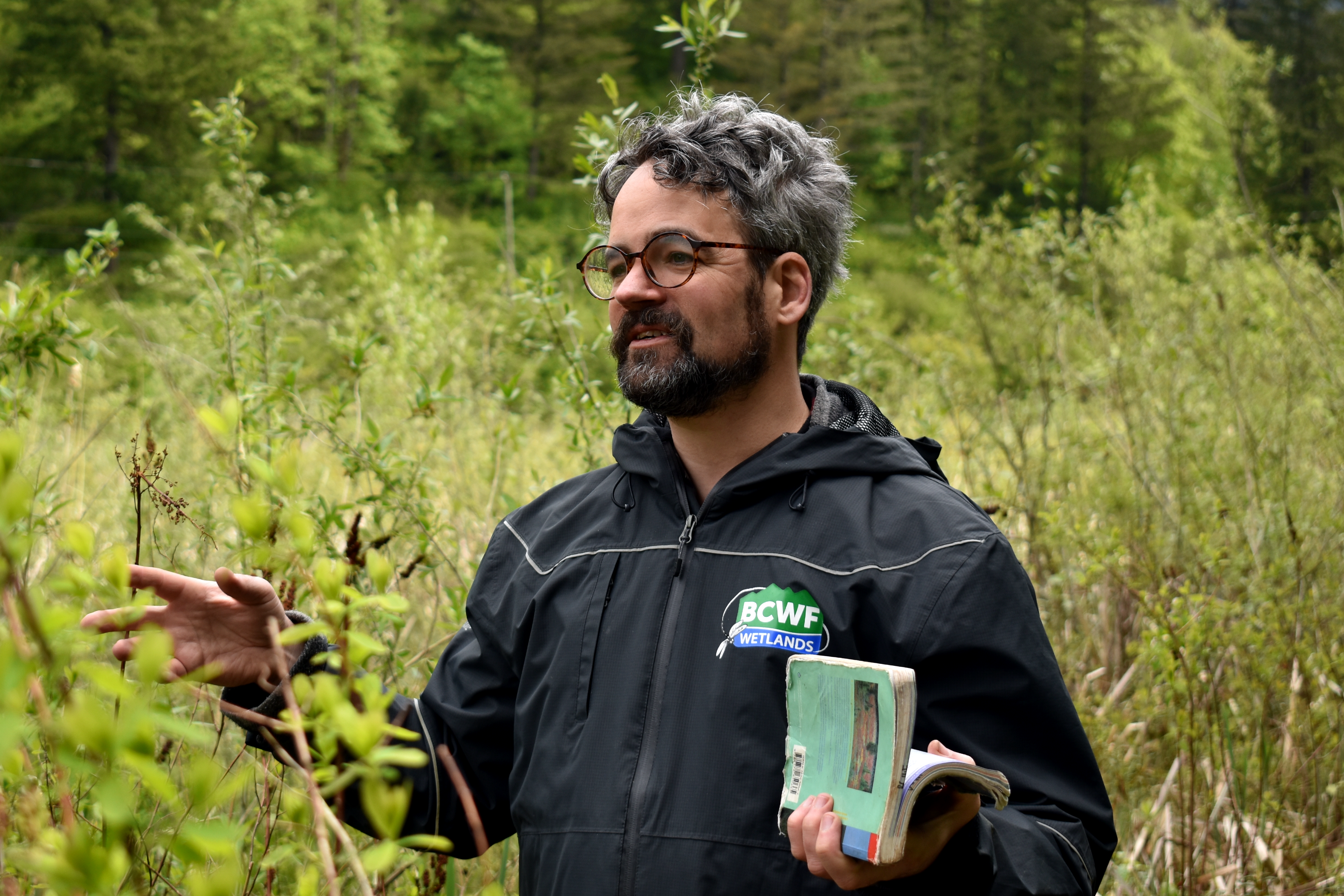
All photos by Molly Dubé
Acknowledgments
Special thanks to our funders: the Fish and Wildlife Compensation Program, the Healthy Watersheds Initiative (a partnership of the Real Estate Foundation of BC, Watersheds BC, and the Province of British Columbia), and Environment and Climate Change Canada.
 BCWF Watershed Team
Leave a comment