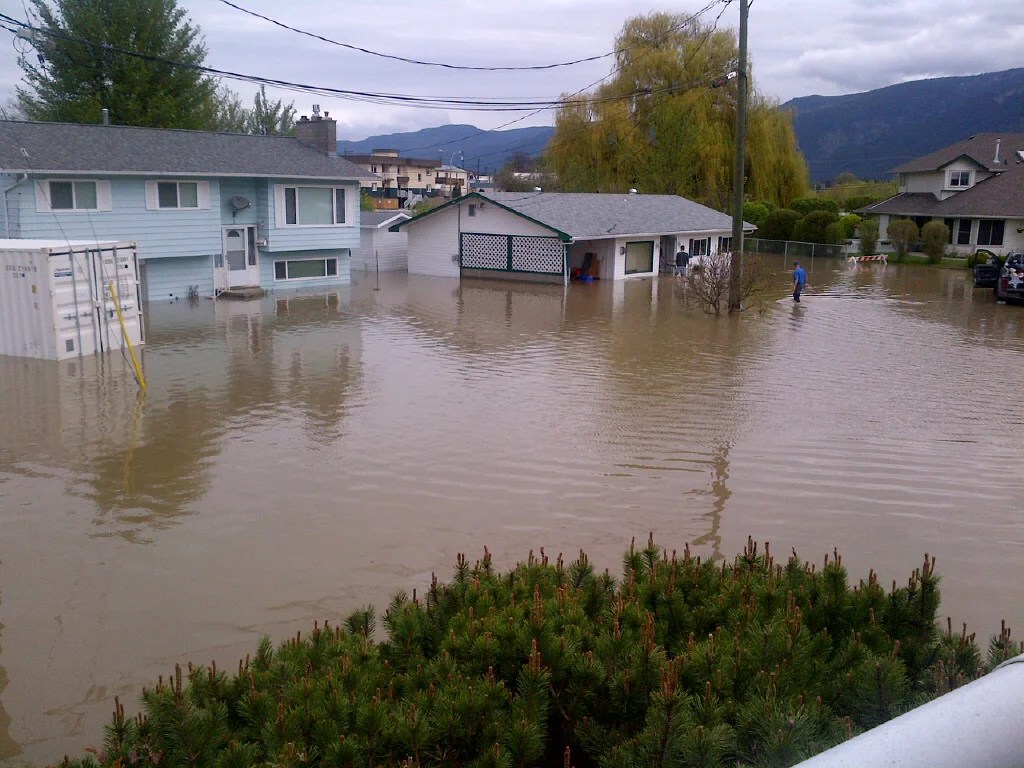
In mid-June, the Wetlands Education Program (WEP) team travelled to the North Okanagan to visit Armstrong and Spallumcheen. Like many of the locations WEP visits, Armstrong and Spallumcheen are situated at the bottom of one of B.C.’s numerous river valleys. Valleys are the result of longstanding erosion of land by glaciers, rivers, or streams. It’s hard to imagine but most of the valleys that humans now occupy were once home to meandering rivers, floodplains, and wetlands. In the Okanagan, there has been significant losses of wetlands since colonization with increasing agricultural and urban development. Armstrong, located in the Spallumcheen Valley, is no different; there has been significant destruction of wetlands through its continued urbanization. The lack of wetlands was made very apparent in 2017 and 2018 when Armstrong experienced back-to-back flooding events that forced the town to call a state of emergency.

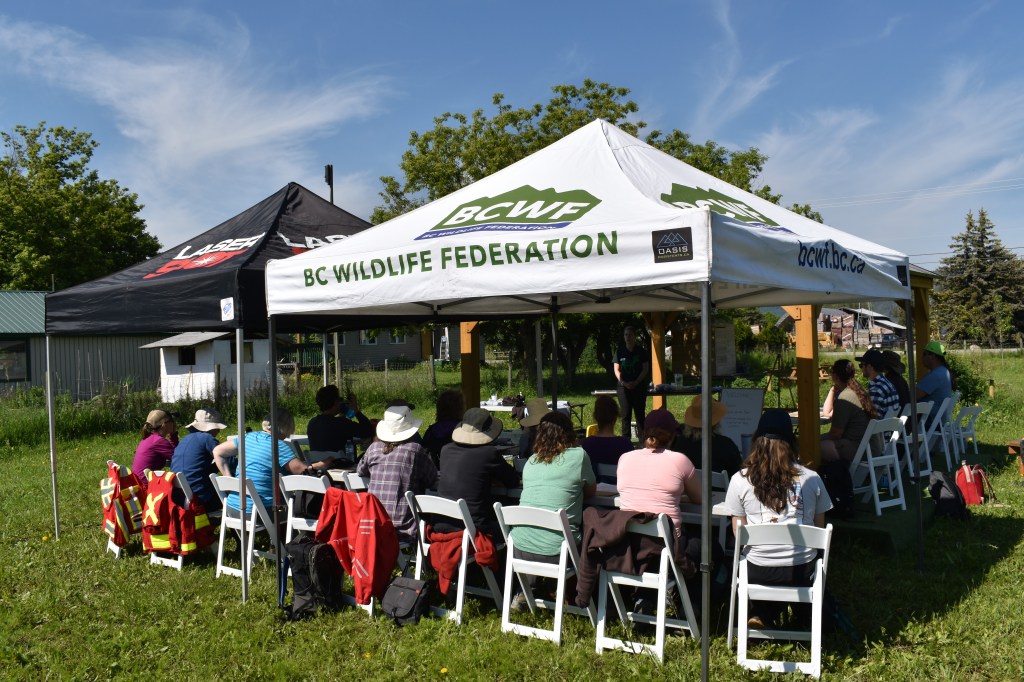
The WEP team was invited to the community by the BC Small Wetlands Association (BCSWA) and the Armstrong Wetlands Association (AWA) to help garner support for the education, preservation, and restoration of wetlands in this small community and beyond.
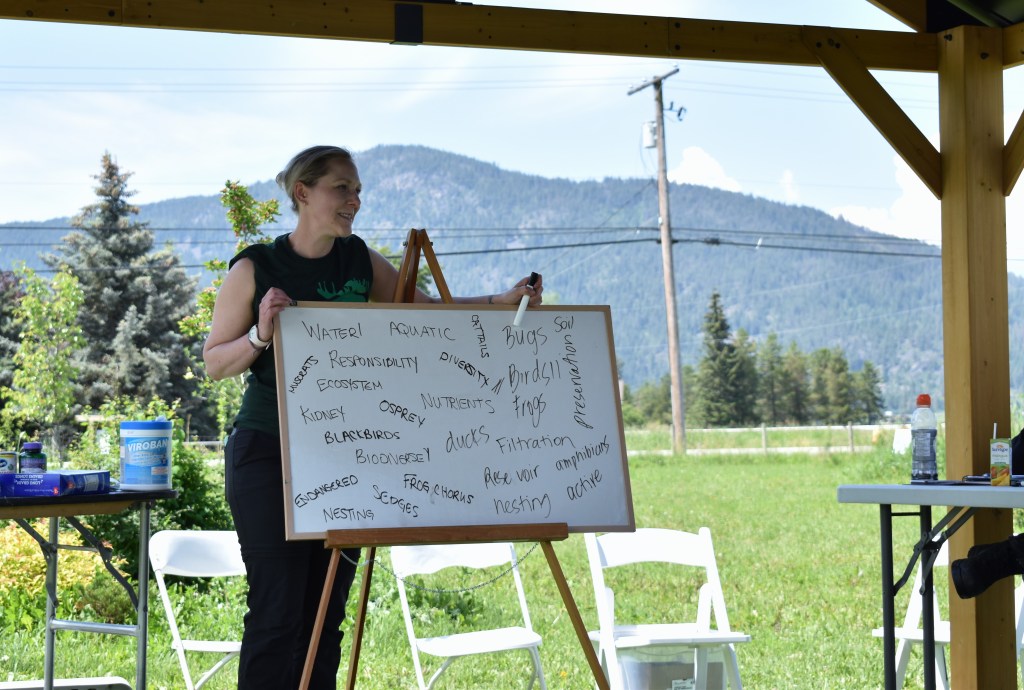
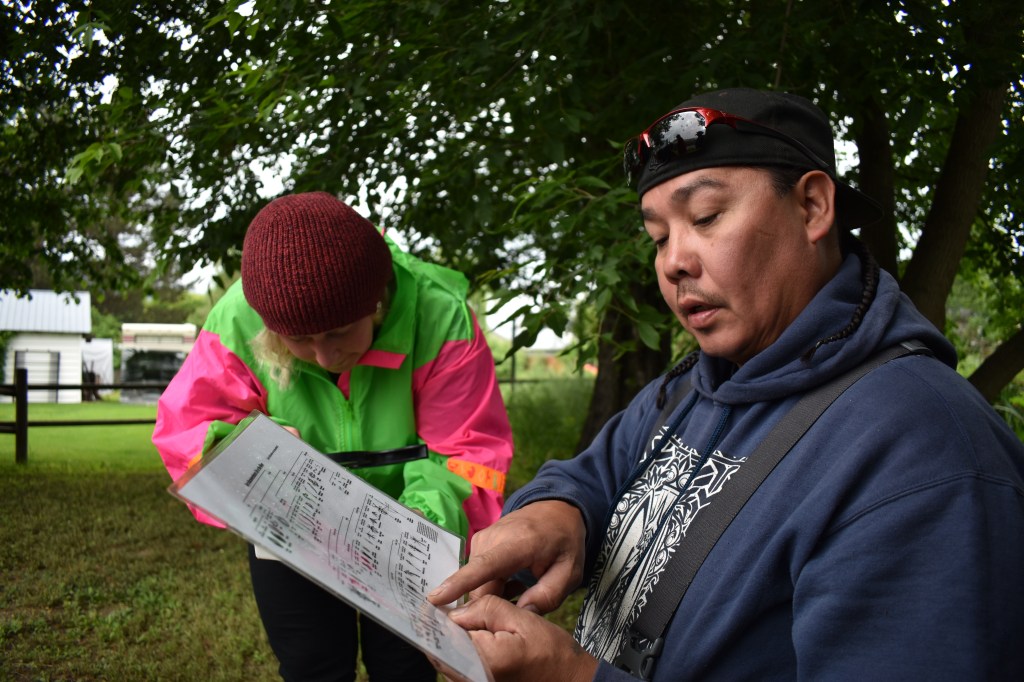
The team was eager to begin the workshop on our partner Barb Craven’s homestead. During the introductory classroom session, the group was honored to have Splatsin Elder, Ethel Thomas, and Bonnie Thomas of the Neskonlith Indian Band join to discuss their work with wetlands. Bonnie has been heavily involved in a wetland restoration and enhancement project in the Salmon Arm Bay and spoke to the group about its progress while Ethel shared some personal stories about her connection to the land and the importance of regaining this connection for Indigenous peoples.
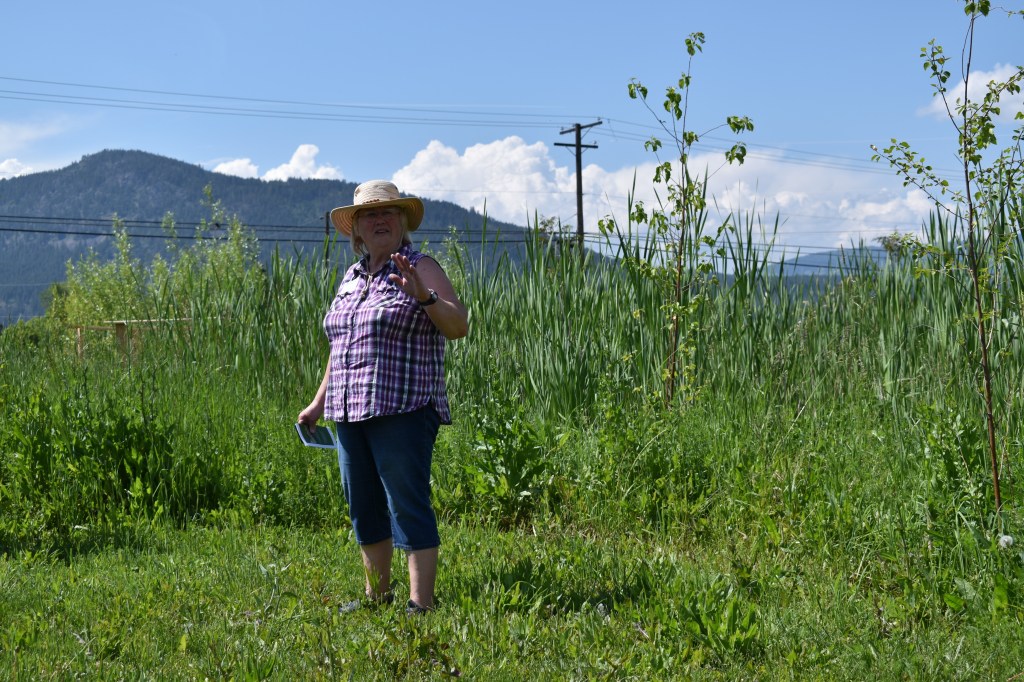
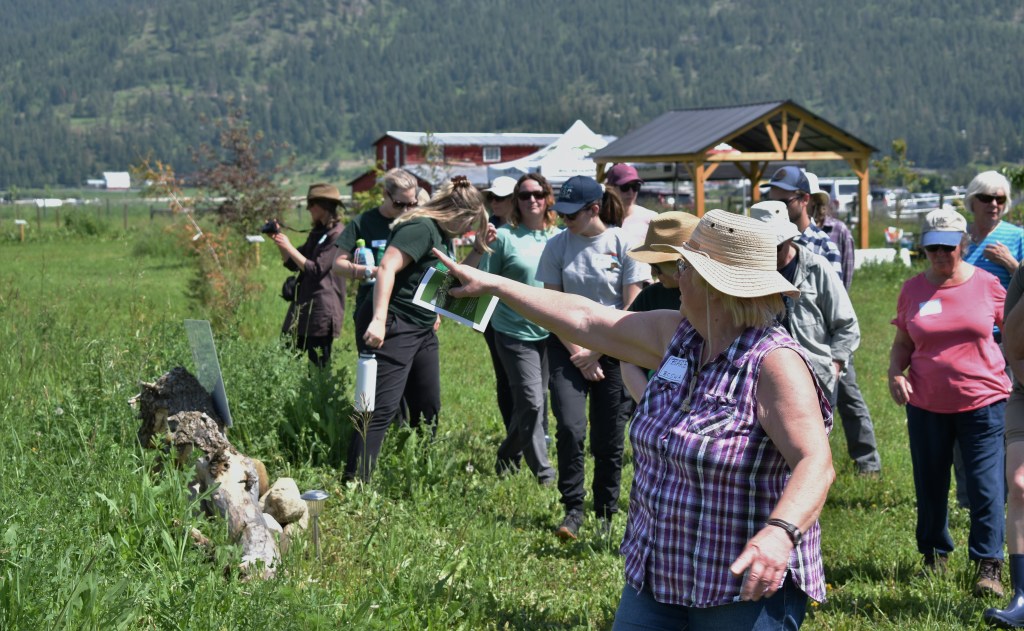
Once the group was up to speed on wetland classification and terminology, Barb Craven of the BCSWA led everyone on a tour of the wetlands built on her property at the Pleasant Valley Wetland Heritage Park in Spallumcheen. The wetlands were constructed in 2018 and have since turned into a showcase of a biodiverse wetland ecosystem that is used as an educational tool for school students and members of the community. With a native plant garden and species starting to flourish in the wetland, it was a great location for participants to practice wetland plant identification. As the day wound to a close, the WEP team led a competitive game of wetland jeopardy where participants had the opportunity to showcase just how much they had learned throughout the day!
After spending the day in a more rural setting, the participants regrouped on the second day at a very urban location. Just a few steps away from the cross section of Patterson Ave and Okanagan Street lies the last of Armstrong’s wetlands. Armstrong, like most of the Okanagan, was once a pristine river valley but with the arrival of European settlers and the Cariboo goldrush, much of the floodplain was converted into farmland. Through time, Armstrong became an urban center, however, at the center of town, a small section of privately owned land still remains in the form of a wetland. This area, although highly disturbed, is home to a variety of wetland species and a dredged channel that flows in and out of Armstrong. For many, this area has become extremely special, nonetheless, the threat of development still looms.
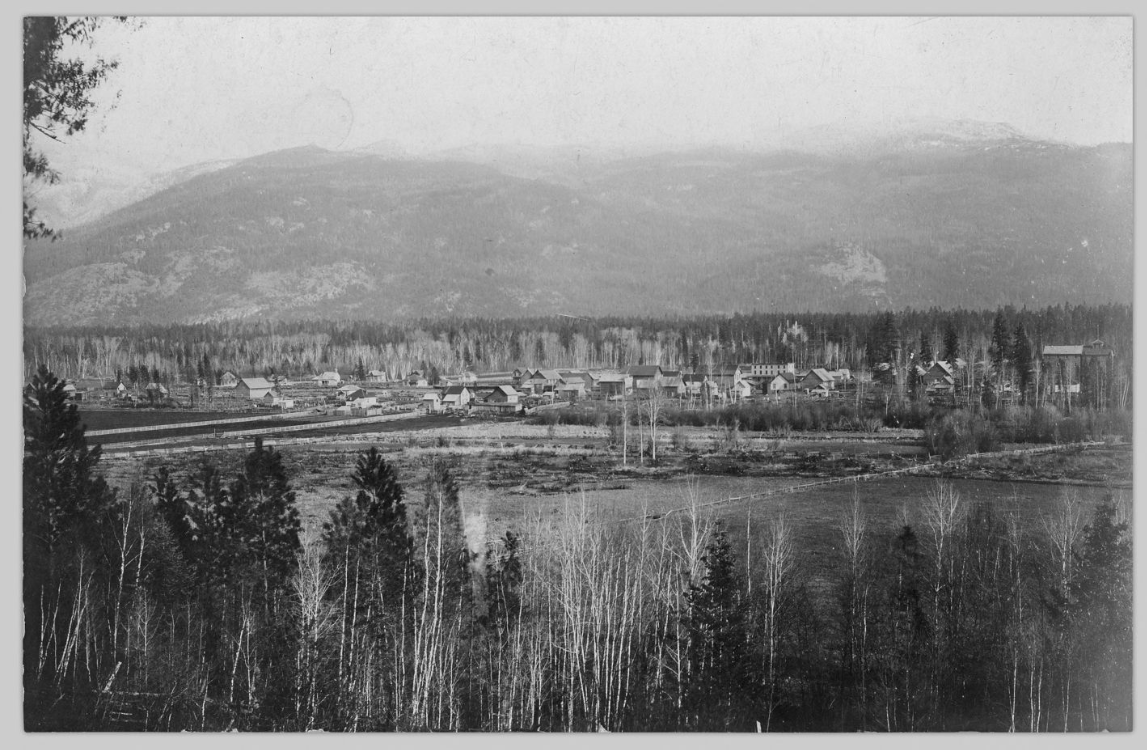
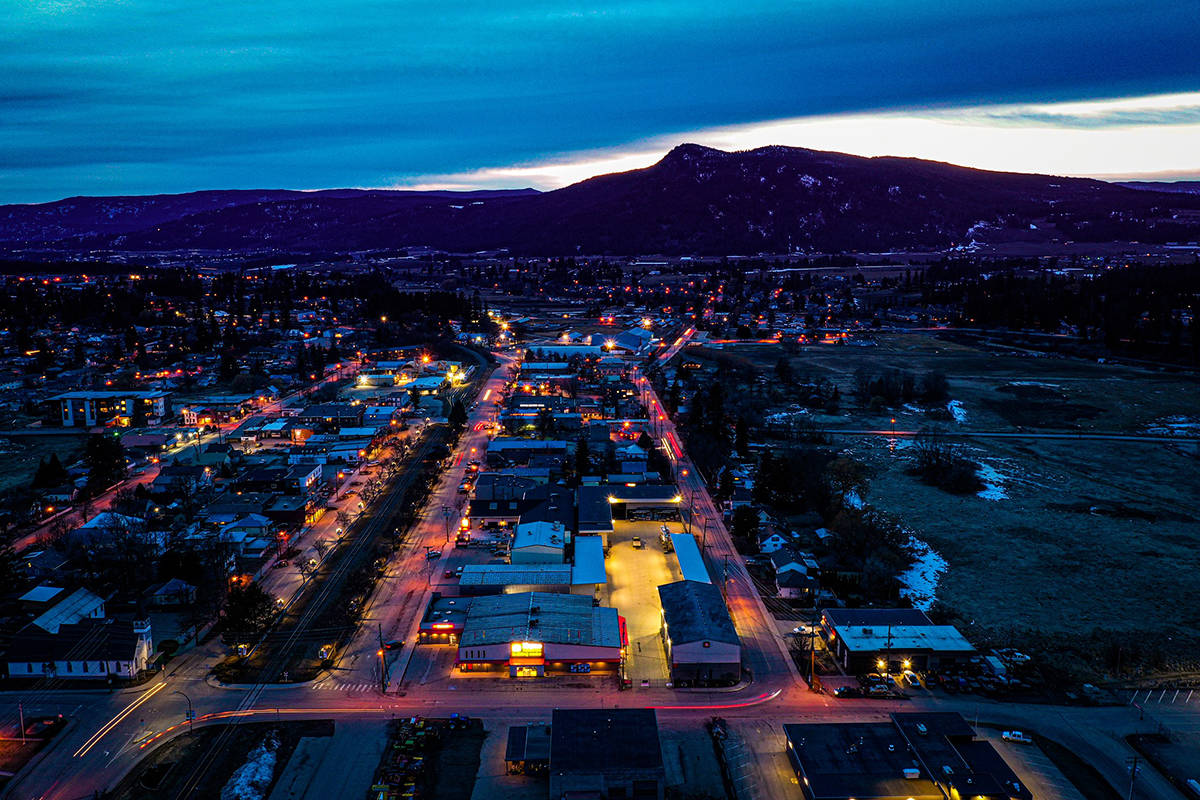
Left: Armstrong by night courtesy of the City of Armstrong
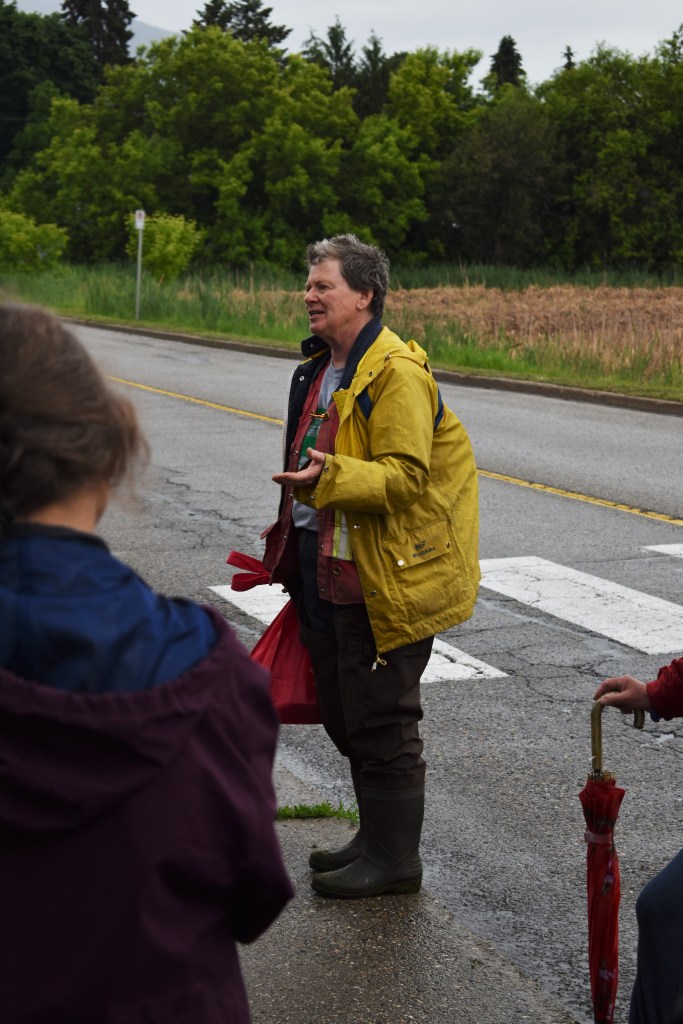
While exploring the area, the WEP team invited well-known local and admired biologist, Marge Sidney, to speak about the potential of the site and the issues it faces. Marge, who has a lifetime worth of wetland knowledge and extensive background in fisheries and water quality, highlighted the idea of creating a pond system that could be formed using the existing water source that currently flows at the edge of the wetland. This would allow the water space to slow down and spread rather than pool at the small culvert that goes under Okanagan Street. This would offer flood protection to the area’s residents while also creating new space for plant and wildlife diversity.
It is well known within Armstrong that the population is growing, and with it, the need for housing. The town of Armstrong is in a tough situation as it is located within the greater municipality of Spallumcheen. This donut-hole-shaped urban area is limited in its capacity to expand as it is surrounded by lands that are part of the agricultural land reserve. As the demand for housing continues to rise in Armstrong, the potential for the private portion of the wetland to be developed or destroyed continues to grow. It is key in situations like this that there is community buy-in for natural spaces. If the community is unable to see the merits of keeping a wetland, it will constantly exist in a threatened state.
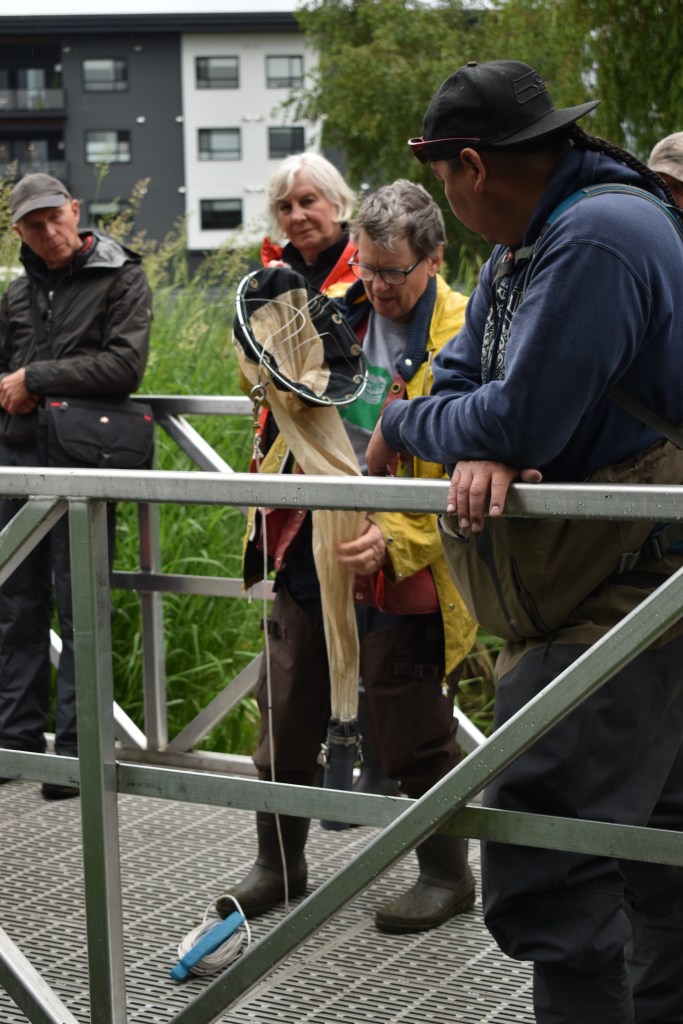
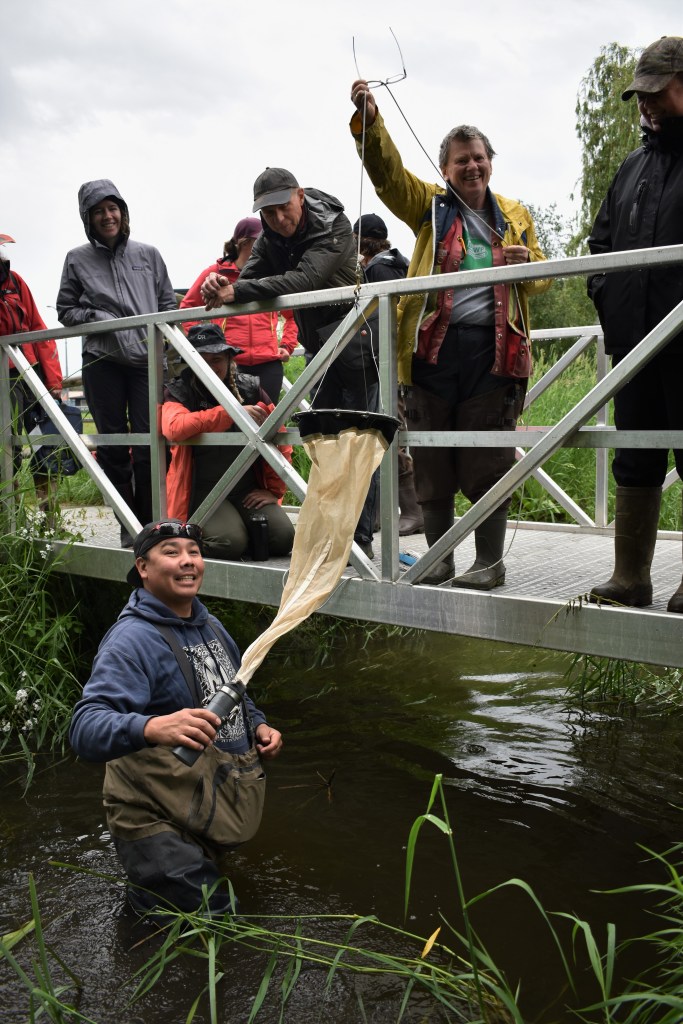
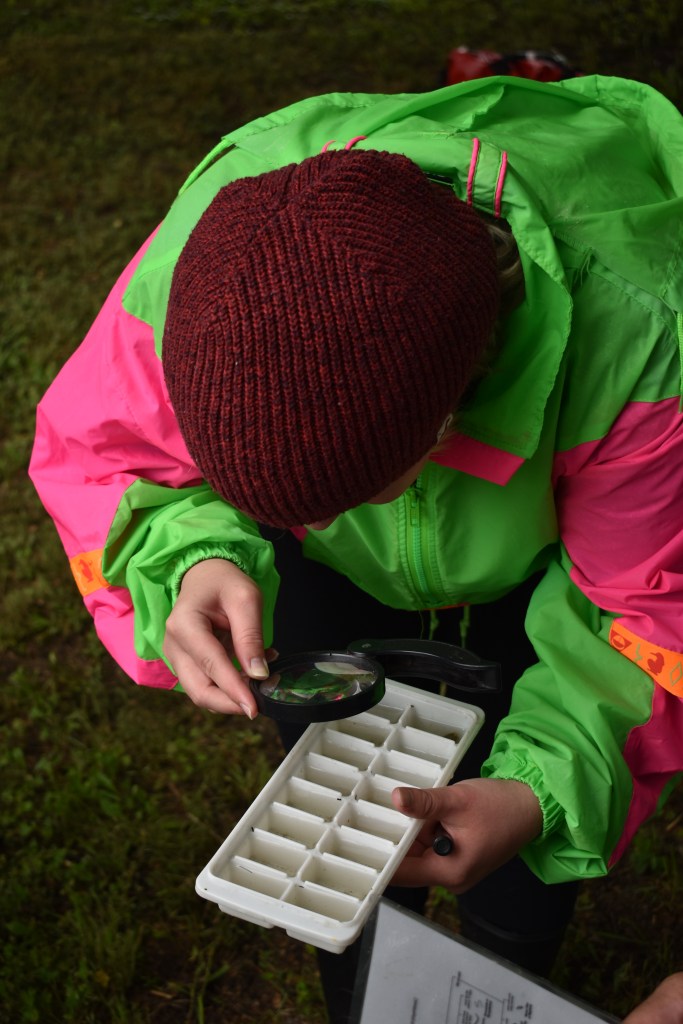
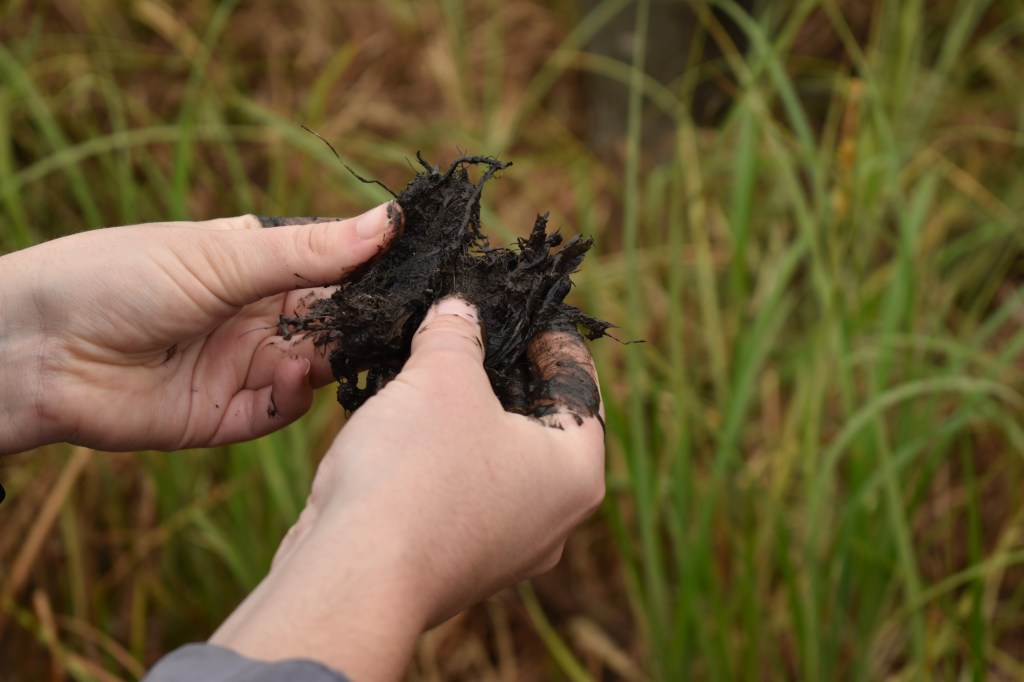
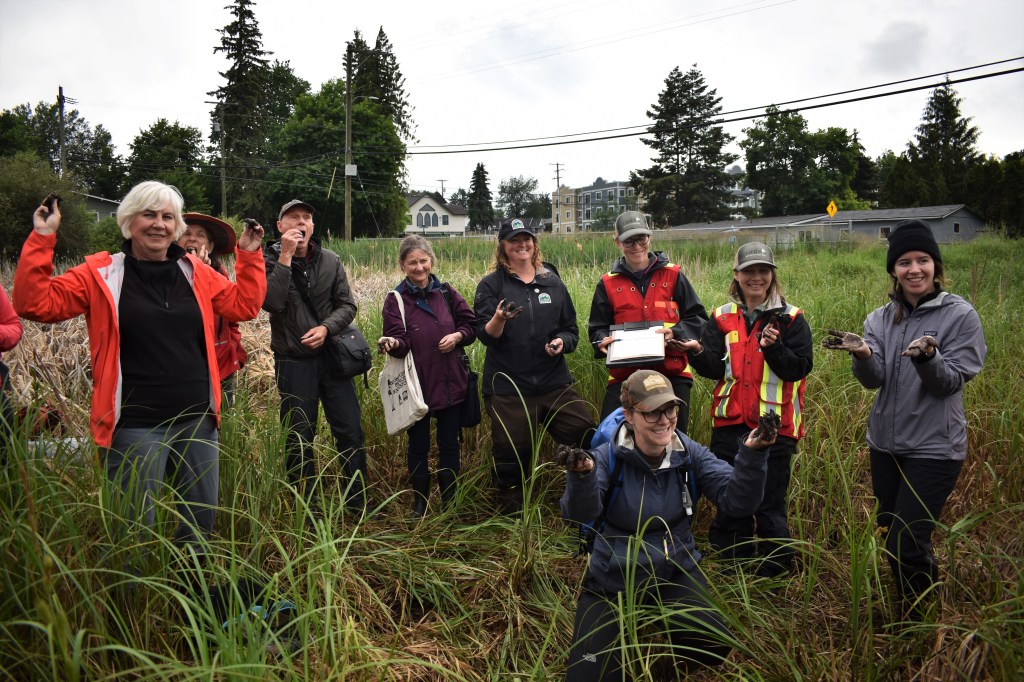
One of the best ways to ensure community buy-in is to build a relationship with a space. To support this notion, we encouraged the group explore the flowing waters of the wetland with macroinvertebrate kits. A group of professional adults quickly became a pack of curious children scooping away in the waters, attempting to identify the numerous macroinvertebrates and finding a diversity of life. Soon after, the group returned to the heart of the wetland where the WEP Manager, Alyssa, led a soil sampling activities that had the group in big smiles.
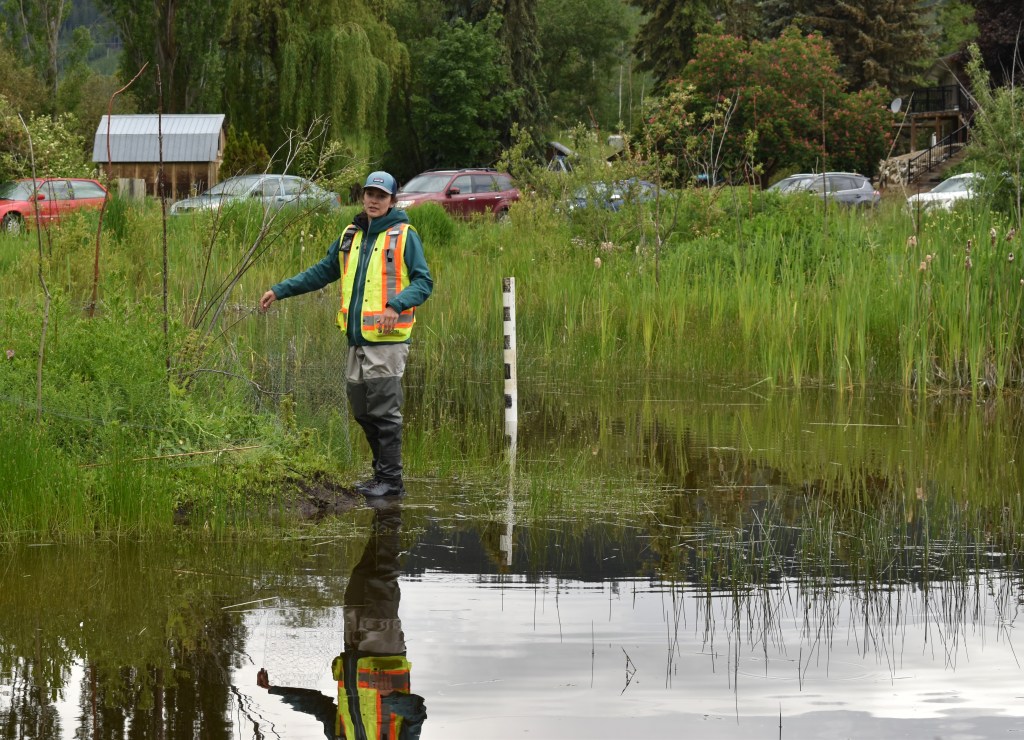
The day ended with a visit to Gardom Lake where the Gardom Lake Stewardship Society has been constructing wetland habitat since 2018. Some of BCWF’s very own Wetlands Workforce staff also joined the group at this site to discuss the maintenance and monitoring work they’ve been conducting at the wetlands. After learning about the success of this project, plans for phase 2 of wetland restoration, and the importance of monitoring and maintaining sites, the group wrapped up the evening in anticipation of an early morning bird walk the following day.

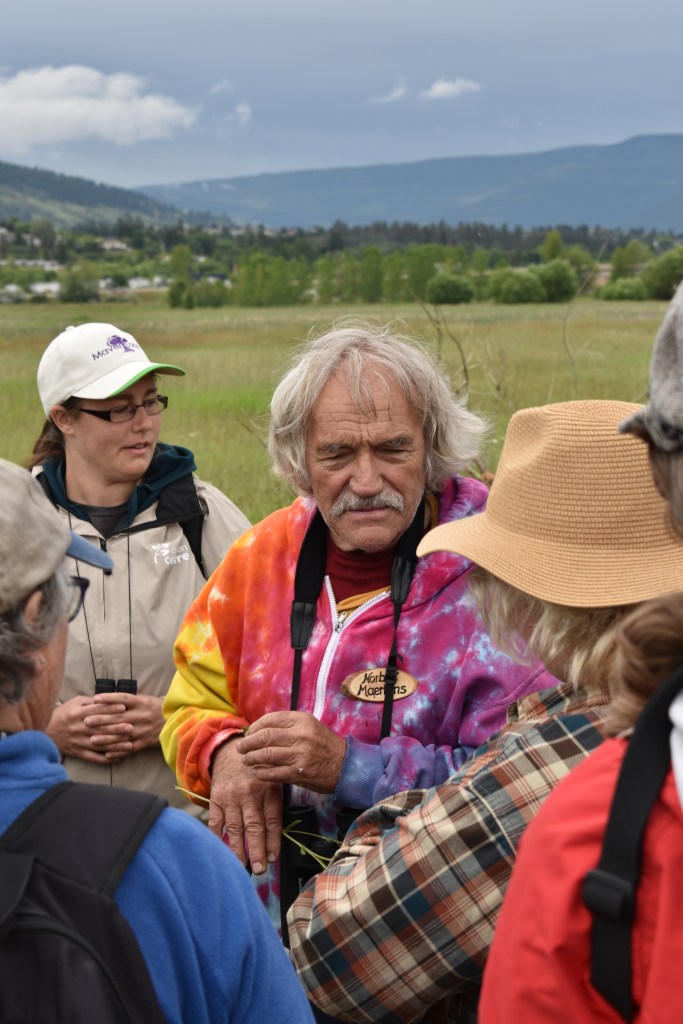
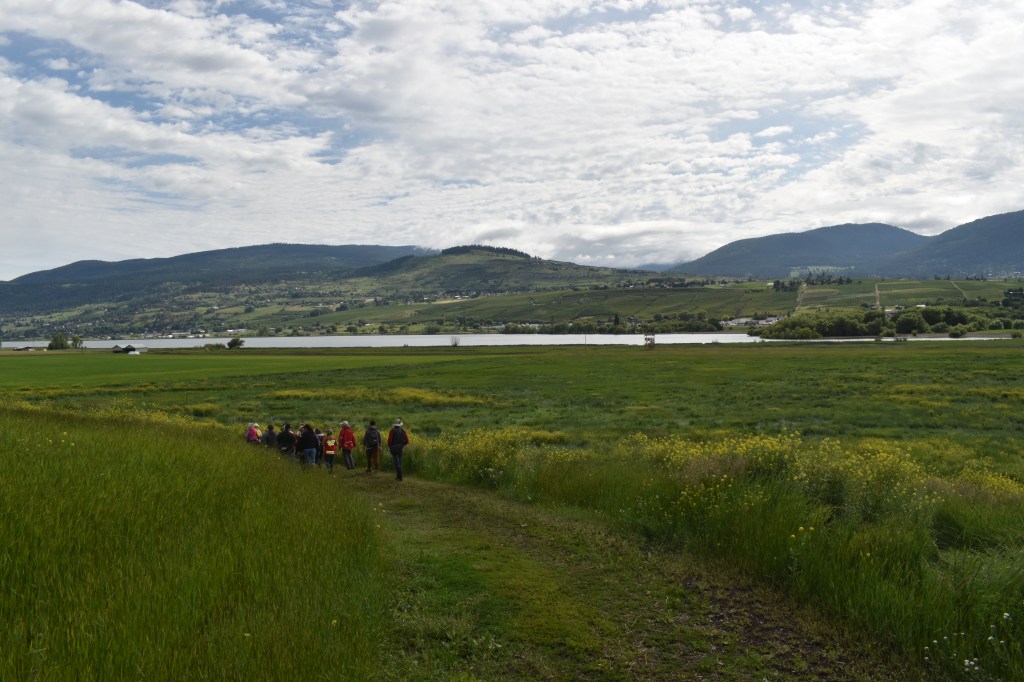
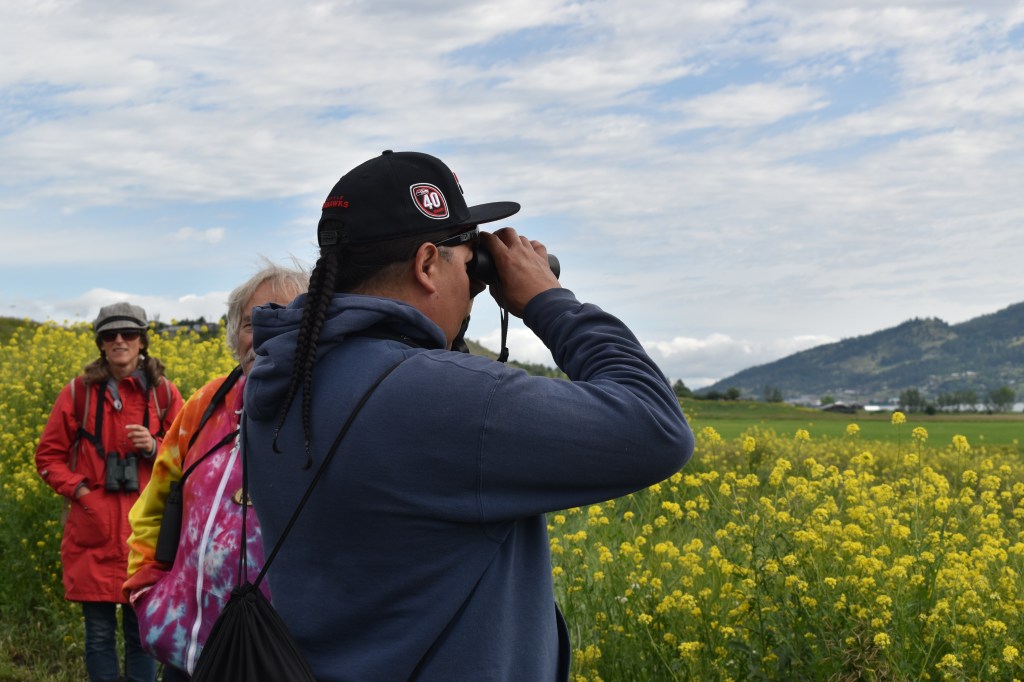
For the final day in Armstrong, WEP had the pleasure of meeting Norbert Maertens of the North Okanagan Naturalists’ Club (NONC) at Swan Lake for a tour of the nature reserve. Norbert has been living in the southern interior for over forty years and in this time, has become a knowledgeable chiropterologist (someone who studies bats) and a passionate birder. While meandering along the circular route overlooking the beautiful marsh, Norbert stopped to showcase his knowledge of a variety of local plants and their uses, and recount what the NONC has been working on in the last few years, including the construction of an observation tower that provides 360o views of the surrounding wetlands. Participants had the pleasure of viewing several bird species such as red-winged and yellow-headed blackbirds, as well as a pair of northern harriers.
As the group returned to the parking lot and departed from a rainy Swan Lake, the WEP team returned home to prepare for the next set of summer workshops. If you’re interested in joining a workshop, visit https://bcwfwatershedteam.ca/wetlands-education-program/ to find upcoming stewardship and learning opportunities.

This workshop was held on the unceded territories of the Secwe̓pemc, Syilx and Confederated Tribes of the Colville Reservation. The B.C. Wildlife Federation operates on the unceded ancestral, traditional and contemporary territories of the Semiahmoo, sq̓əc̓iy̓aɁɬ təməxʷ (Katzie), S’ólh Téméxw (Stó:lō), Á,LEṈENEȻ ȽTE (W̱SÁNEĆ), Kwantlen, Stz’uminus, and Hul’qumi’num Treaty Group Nations.
This workshop was held free of charge for participants, and would not have been possible without the generous financial support of the following contributors/ Ce projet a été réalisé avec l’appui financier de:
The Real Estate Foundation of BC, the Healthy Watersheds Initiative, the Province of British Columbia, Wildlife Habitat Canada, Watersheds BC, Environment and Climate Change Canada
 BCWF Watershed Team
Leave a comment