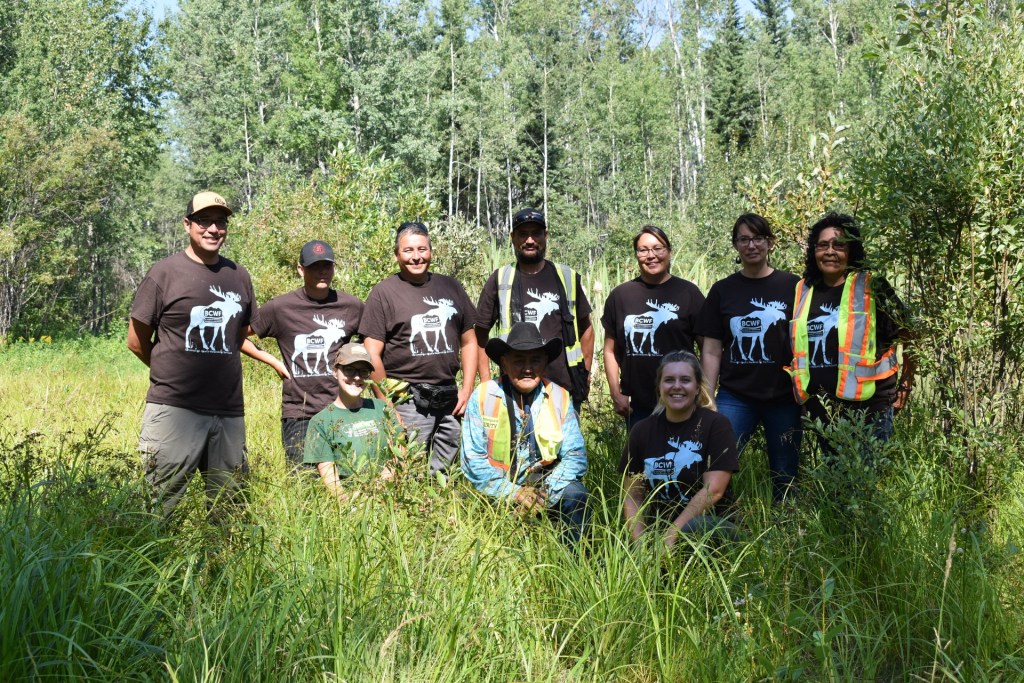
On August 3–4, 2021, the B.C. Wildlife Federation’s Wetlands Education Program (WEP) visited the community of Doig River (Hanás̱ Saahgéʔ) to deliver the final Map our Marshes workshop of the season. Typically a one-day, hands-on course, this extended workshop provided additional time for in-depth discussions on wetland assessment and more extensive fieldwork.
Situated approximately 70 km northeast of Fort St. John, B.C., the Doig River First Nation is one of four Dane-zaa (Beaver) communities in the Peace River area. The WEP team was joined by nine enthusiastic participants, including staff from the Doig River Lands Department, natural resource managers, a knowledge keeper/Elder, and even a high school student aspiring to enter the environmental field.
The workshop began with an introduction to wetland concepts, led by WEP Coordinator Alyssa Purse. Participants learned about wetland classification, ecological values, and the extent of wetland loss. To reinforce their new knowledge, they engaged in a spirited game of “Wetland Jeopardy.”
Armed with classification skills, participants spent the afternoon identifying plant species and analyzing soil types to determine wetland characteristics. The first site appeared dry with well-established trees, but the presence of wetland-adapted plants and saturated soils revealed it to be a wetland. The dry surface conditions were attributed to the exceptionally warm summer of 2021, highlighting the importance of recognizing ephemeral wetlands, which may not always have visible water but still function as vital ecosystems.
The second day focused on the Doig River community’s connection to wetlands, GPS mapping techniques, and wetland health assessments. The day commenced with Elder Jack Askoty guiding the group to a wetland he frequents for foraging and hunting. With over 50 years of bush experience, Jack shared invaluable knowledge on traditional plant uses and wildlife behavior:
- Beavers act as natural weather predictors; they dismantle dams in anticipation of heavy rains to clean out ponds.
- Chewing on willow branches can alleviate headaches, fevers, and coughs, and can also be brewed into a tea.
- Moose, particularly cows with calves, rely on marshes for protection from predators, often staying within a mile of wetlands.
- Applying chewed rose leaves to cuts can soothe pain and stinging.
Jack emphasized the importance of respecting nature, reminding participants that just as wildlife do not disrupt our homes, humans should avoid disturbing theirs. His insights and storytelling enriched the workshop experience.
Later, the group visited a shallow open water wetland to practice using handheld GPS devices for mapping. WEP Assistant Alana Higginson instructed participants on basic GPS functions, including waypoint marking, track recording, and data retrieval. This hands-on experience equipped attendees with practical skills for documenting and monitoring wetlands in their territories.
The workshop concluded with a wetland health assessment at a marshy site. Participants conducted visual surveys, noting indicators such as wildlife presence, invasive species, and human disturbances. This exercise provided a comprehensive understanding of wetland evaluation techniques.
The WEP team extends heartfelt thanks to the Doig River First Nation for their hospitality and active participation. Special appreciation goes to Elder Jack Askoty for sharing his profound knowledge and to the workshop attendees for their enthusiasm and commitment to wetland stewardship.
To see pictures from the workshop, click here!
Thank You to Our Funders
We extend our sincere gratitude to the following funders for their generous support of our wetland education and restoration initiatives:
- Fish & Wildlife Compensation Program (FWCP)
- Wildlife Habitat Canada
- Environment and Climate Change Canada (ECCC)
- Province of British Columbia
Thank you for your ongoing commitment to conserving British Columbia’s wetlands and wildlife.
 BCWF Watershed Team
Leave a comment