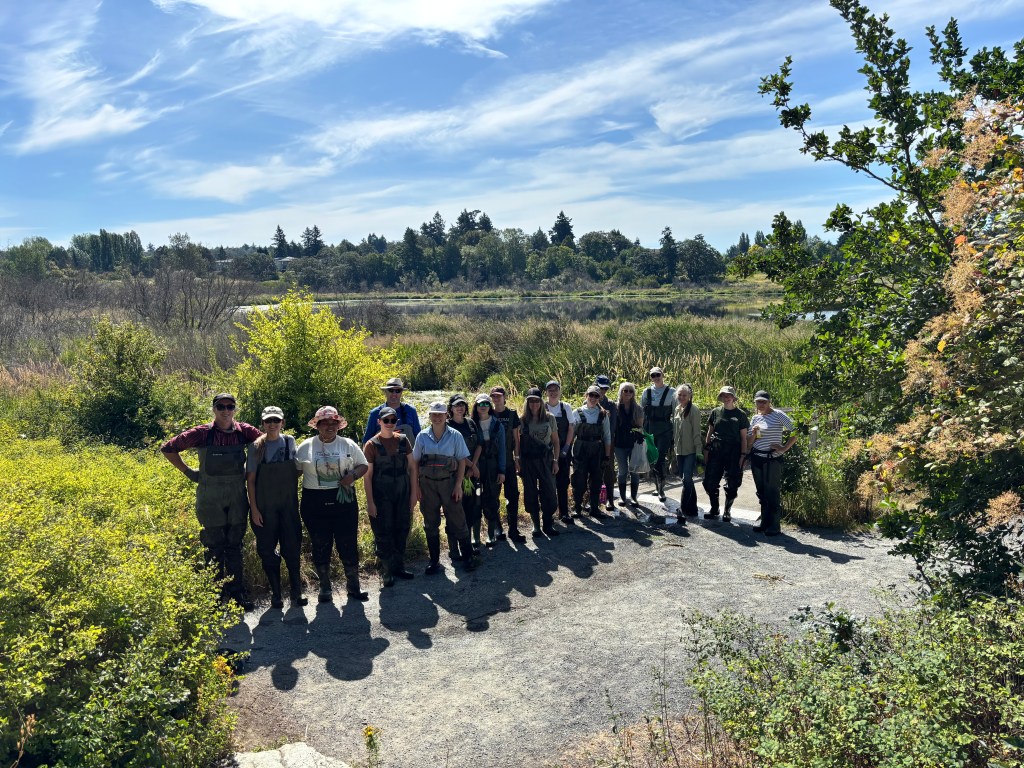
This July, the B.C. Wildlife Federation’s Wetland Education Program (WEP) facilitated a 2.5‑day Wetlandkeepers workshop in Victoria, B.C., in partnership with the Bilston Watershed Habitat Protection Association and Swan Lake Nature Sanctuary at Swan Lake Christmas Hill Nature Sanctuary—a living classroom rich with native plants, visiting and resident birds, and even a Western Painted Turtle. It was the perfect setting for a wide variety of participants to immerse themselves in the world of wetland ecology, restoration, and stewardship.
The first evening began indoors, where participants met WEP Coordinator Erika Kolli for Wetlands 101. She introduced the science and significance of wetlands in British Columbia, explaining their many ecological values and the steep losses they have faced across the province. Next, Michelle Sawka from Simon Fraser University’s Action on Climate Team expanded the lens to show wetlands as powerful nature‑based climate solutions—storing carbon, moderating temperatures, and protecting communities from climate‑related impacts.
The second day began with Erika leading the group through wetland classification techniques and valuable tools like the BC Marsh Monitoring Program. These resources, she explained, can help local stewards map, assess, and advocate for the protection of wetlands in their own communities. Soon the classroom gave way to the outdoors, and participants found themselves wandering the rich wetland complex of Swan Lake. They practiced identifying birds by sight and sound and waded into shallow water to discover benthic macroinvertebrates—tiny aquatic creatures that reveal much about a wetland’s health.
In the afternoon, Alana Higginson, WEP Manager, guided the group in plant identification, soil classification, and hydrology observations. Through this hands‑on work, participants learned to recognize the three key ingredients of wetlands: water, vegetation, and soil. Cara Gibson, Executive Director of Swan Lake Nature Sanctuary, then introduced nature journaling. In the quiet shade, people of all ages sketched birds, plants, and whatever caught their eye. It was a slower, more personal way of connecting to place—an act of stewardship that comes from observation and care.
On the final day, stewardship moved from learning to doing. Under the guidance of Site Director Jay Rastogi, the group helped remove invasive giant managrass (Glyceria maxima) from the shoreline. This aggressive plant threatens native vegetation, and its removal was a meaningful boost to the health of Swan Lake.
The group then travelled to Rithet’s Bog, a rare peatland ecosystem, where Larry Statland of the Rithet’s Bog Conservation Society shared its history and the work underway to protect it. Participants learned how peat bogs and fens store carbon and water, and why their preservation is essential in a warming climate.
The workshop concluded with a visit to the Panama Flats. Here, Hollis Hodson from the Carey Area Residents Association (CARA) described the transformation of former farmland into a multi‑use park area. An updated concept plan is in the works by Saanich Parks who are working with the community to learn how they’re using the park space and building a vision with them for the future. CARA hopes the updated concept plan will lead to implementation that creates habitat corridors while preserving flood protection and public recreation—an example of how cities can weave wetland conservation into urban life.
By the workshop’s end, participants left with practical skills, new knowledge, and connections to others working in wetland conservation. From invasive species removal to bird monitoring and plant identification, they gained the tools needed to support wetlands in their own communities and a clearer understanding of their ecological importance.
Thank you to our funders, Wildlife Habitat Canada and the Government of British Columbia who made this workshop possible!
 BCWF Watershed Team
Leave a comment