Mosquito Creek in North Vancouver was once a thriving salmon-bearing stream, but decades of urbanization, channelization, and flood control measures dramatically changed its course—both literally and ecologically. Since the 1960s, human impacts have degraded the creek’s natural habitat, making the return of salmon a rare sight.
Recognizing the urgent need for restoration, the North Shore Streamkeepers (NSSK) took action. In 2021, under the guidance of NSSK’s President, Keegan Cassidy, they launched the first phase of a habitat improvement project aimed at reintroducing natural stream features and improving spawning conditions for salmon.
Phase One: Setting the Foundation
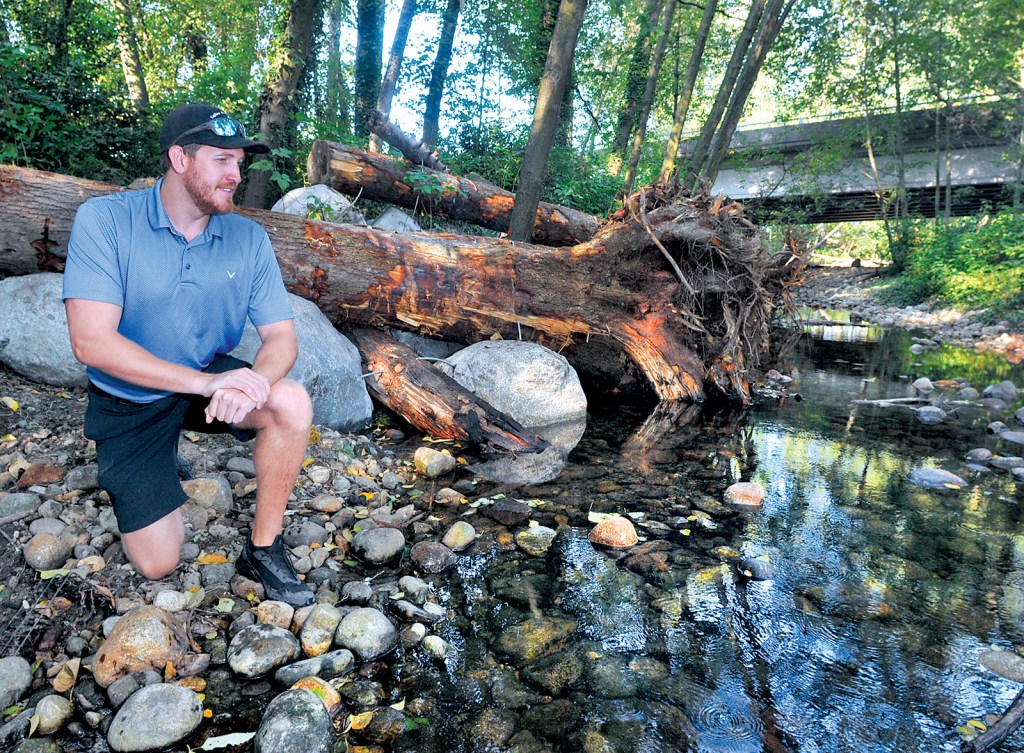
Phase One focused on restoring the lower section of Mosquito Creek. NSSK installed large woody debris and boulders to improve stream complexity—essential features for salmon to spawn and rear their young. The impact was clear: after years of seeing little to no salmon in the creek, volunteers began spotting small amounts of returning salmon each year. It was a small but strong indicator that the habitat was recovering.
Phase Two: Expanding the Effort
Building on that success, NSSK partnered with the B.C. Wildlife Federation and the Sḵwx̱wú7mesh Úxwumixw (Squamish Nation) to launch Phase Two in 2024. This phase focused on a 130-metre stretch of the creek that had been heavily degraded by urban development.
Together, we installed approximately 45 cedar logs and 150–200 boulders to form Large Woody Debris (LWD) structures designed to last 20–30 years. These features mimic natural conditions, creating deep pools, shaded areas, and flow variability—all of which support salmon life cycles. Before the restoration, this section of creek simply lacked the physical structure needed for salmon to thrive.
To support the restoration and community learning, a hands-on workshop was held on August 31 in partnership with the North Shore Streamkeepers. Participants gained valuable technical skills related to LWD installations, guided by Dave Harper, head of BCIT’s Ecological Restoration Program.
Following the completion of Phase Two, adult chum salmon returned to Mosquito Creek in late 2024—a powerful sign that the creek is on the path to recovery. By early 2025, volunteers observed hundreds of chum offspring, indicating successful spawning and positive ecological response to the restored habitat.
“There were over 50 salmon for sure, maybe even 100,” observed Keegan Cassidy, president of the North Shore Streamkeepers. “This is a big change compared to the 40-year average of zero. Before 2020, the best run on record was only six. I’m hoping that one day we’re going to eclipse the 1,000-fish-per-year mark. There were certainly years when thousands upon thousands of salmon returned.”
Looking Ahead
The success of this project has energized the community and strengthened the momentum to continue restoration further upstream. As Keegan Casidy of NSSK noted, the vision now is to support the return of thousands of salmon to Mosquito Creek each year.
Thank you to Environment and Climate Change Canada and the Province of BC’s Watershed Security Fund for supporting this work.
 BCWF Watershed Team
Leave a comment