Imagine the potential obstacles you might face traversing the outdoors as a person with physical disabilities. Is that curb too high? Can I cross that sand or wade through that mud? People with limited mobility and those who use wheelchairs face these obstacles engaging in ordinary outdoor activities.
One in seven British Columbians live with mobility challenges as a result of physical disabilities, neurological issues, and advancing age.
“I grew up in Alberta and was always outdoors. I developed quite a passion for fishing, and it was something I could not spend enough time doing,” said Mike Stiles, an angler and volunteer organizer for BCWF’s Fishing Forever program who lives with a physical disability. “I now have two girls who love to go fishing as well and finding accessible spots or docks is always a challenge.”
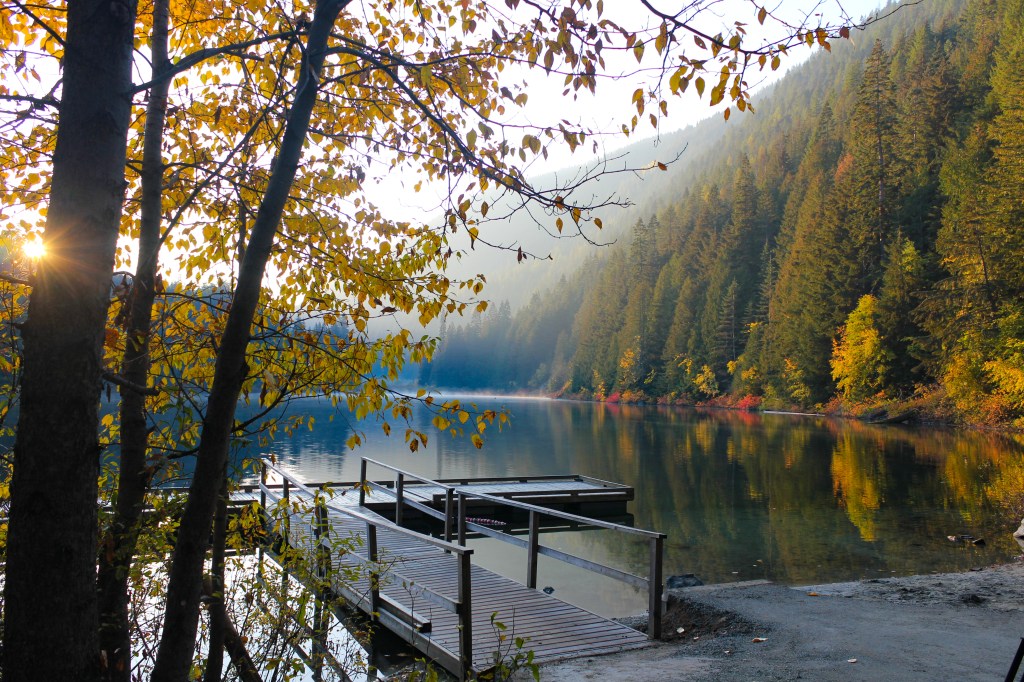
“I recently saw a dock that looked accessible, so I packed up my girls to go fishing there,” he recalled. “When I got there, I was sadly disappointed because I was not able to manage the trail to the accessible dock.”
Outdoor recreation can easily be thwarted by inaccessible built environments, but also the challenges of natural terrain.
To ensure that everyone, from occasional users to avid anglers, has access to outdoor spaces, the B.C. Wildlife Federation has invested in accessible trails, fishing docks, and lake amenities by leveraging $633,700 in funding and support from the Community Economic Recovery Infrastructure Program, Columbia Basin Trust, and the Freshwater Fisheries Society.
Through the Outdoor Accessibility Improvement Project (OAIP), 23 lakes have been targeted for accessibility upgrades, many near urban centres and in regional and provincial parks throughout B.C. Upgrades include the installation of five new docks in prime fishing locations, seventeen transition plates to allow wheelchairs to smoothly cross from the trail to the dock, two accessible washroom facilities, and five trail enhancements.
When planning accessibility improvements, it is essential to have the assistance of someone with lived experience to make sure all accessibility issues are considered. Issues from trail width, grade, and terrain to a lack of assistive equipment may need to be addressed.
Low-impact, affordable activities like fishing offer outdoor experiences that abled-bodied individuals take for granted, especially because people with disabilities, often face additional costs because of their physical challenges, Stiles said.
“Fishing is one of the cheapest activities a person can participate in,” said Stiles. “Fishing can also be very empowering because regardless of age, gender, or disability, everyone can participate together.”
Building universal access into the community benefits everyone, and dock accessibility upgrades are only the first step. Creating accessible and inclusive opportunities for outdoor recreation starts with considering the way people approach disability and the outdoors.
Through programs like Fishing Forever, the BCWF collaborates with recreationists with disabilities to make the outdoors a space that everyone can enjoy.
“I know making outdoor spaces accessible is challenging, and I appreciate all the work that the B.C. Wildlife Federation and others are doing,” said Stiles. “Having access to outdoor spaces can have a huge impact on a person and their family’s lives.”
This story, by Rachel Teichman (Fish Habitat Restoration and Education Program Assistant), first appeared in the MAR/APR 2023 issue of BC Outdoors Magazine in our member exclusive insert. Become a BCWF member today to get our news delivered directly to your mail box at bcwf.bc.ca/membership.
 BCWF Watershed Team
Leave a comment