
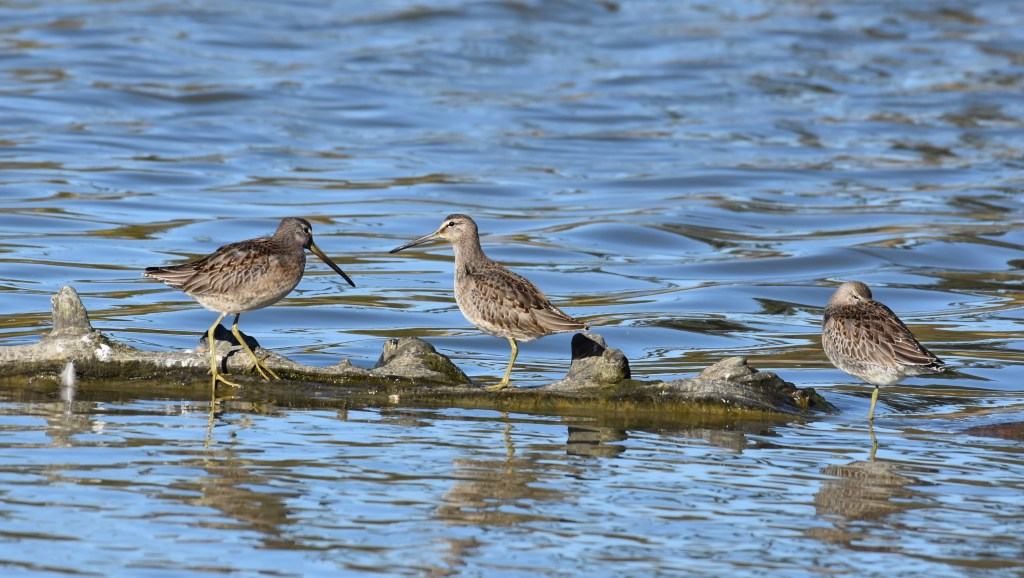
The long-billed dowitcher (Limnodromus scolopaceus) is a medium-to-large shorebird often seen in British Columbia during its fall migration along the Pacific Flyway. Though less commonly spotted in winter, some individuals remain in southern parts of the province before continuing their journey as far south as Central America during colder months.
This species is a classic wetland dweller, frequenting freshwater marshes, wet meadows, and coastal riparian zones. It feeds primarily by probing into mud and shallow water for insects, aquatic larvae, mollusks, and marine worms. You might recognize it by its distinctive foraging behavior—rapidly bobbing its bill in and out of the mud like a sewing machine.
Long-billed Dowitchers breed in Arctic tundra wetlands, especially along the Alaskan coast. Their nests are typically shallow scrapes in the ground lined with moss, sedge, or grass, hidden among low vegetation.
While the female lays a clutch of four eggs, the male takes on most of the parental care. Both parents may share the incubation duties for the 21-day period, but the female often departs shortly after the chicks hatch. The young are precocial—they begin foraging independently within a day of hatching—and are cared for solely by the male until they fledge 20 to 30 days later.
This species is sometimes confused with its close relative, the Short-billed Dowitcher (Limnodromus griseus). The two were not even recognized as separate species until the 1950s. While they appear similar, their vocalizations are distinct and can be a helpful identification tool—listen for the sharp, high-pitched “keek” of the Long-billed Dowitcher when in doubt.
Its varied seasonal plumage, cryptic coloration, and migratory patterns make the Long-billed Dowitcher a fascinating and occasionally elusive bird to observe. Keep an eye out in muddy shorelines and marshy wetlands, especially during migration season, for a chance to witness this quirky wetland specialist in action.
 BCWF Watershed Team
Leave a comment