
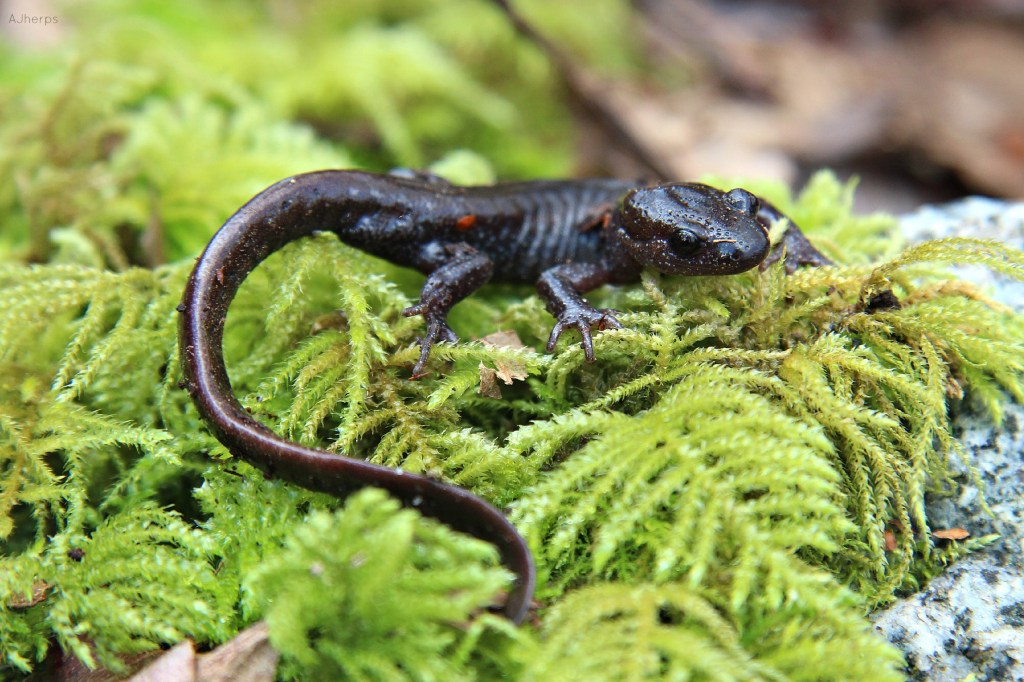
The long-toed Salamander (Ambystoma macrodactylum) is a small but fascinating amphibian found throughout much of British Columbia. Named for the distinctive elongated fourth toe on each hind foot, this species is a common—though often overlooked—resident of wetland habitats across the province.
These salamanders are highly adaptable and occupy a variety of moist environments, including forests, grasslands, and the edges of ponds and wetlands. While they are mostly nocturnal, you might spot one during the day hiding under rocks, logs, or leaf litter near water. Their range extends across B.C. and into Alberta’s Rocky Mountains, and the species is currently not considered at risk.
Despite their modest size, Long-toed Salamanders play a vital role in wetland ecosystems. They feed on small invertebrates such as insects, worms, and spiders, while also serving as prey for snakes, birds, and small mammals. Their presence in a wetland is often a good sign of ecosystem health.
In early spring, Long-toed Salamanders migrate to shallow ponds and temporary pools to breed. Females lay their eggs in clusters, attaching them to submerged vegetation or woody debris. After hatching, larvae spend several weeks in the water before transforming into land-dwelling juveniles by late summer.
As temperatures drop in the fall, Long-toed Salamanders seek shelter underground or in rotting logs to overwinter in frost-free refuges, emerging again when conditions warm in spring.
Coloration can vary, but most individuals display a dark body with a greenish or yellow dorsal stripe that runs from the head down the back and tail. Some show speckled or mottled patterns along their sides.
When threatened, these salamanders can secrete a sticky, milky substance from their tails, which may deter predators. It’s one of several clever adaptations that help them survive in a world full of hungry mouths.
Because of their sensitivity to environmental changes, Long-toed Salamanders are considered excellent indicator species. Their presence—or absence—can reveal a lot about the health of wetland ecosystems.
For more information on the Long-toed Salamander in B.C., visit the B.C. Frogwatch Program website.
 BCWF Watershed Team
Leave a comment