
Tag: Watersheds
-
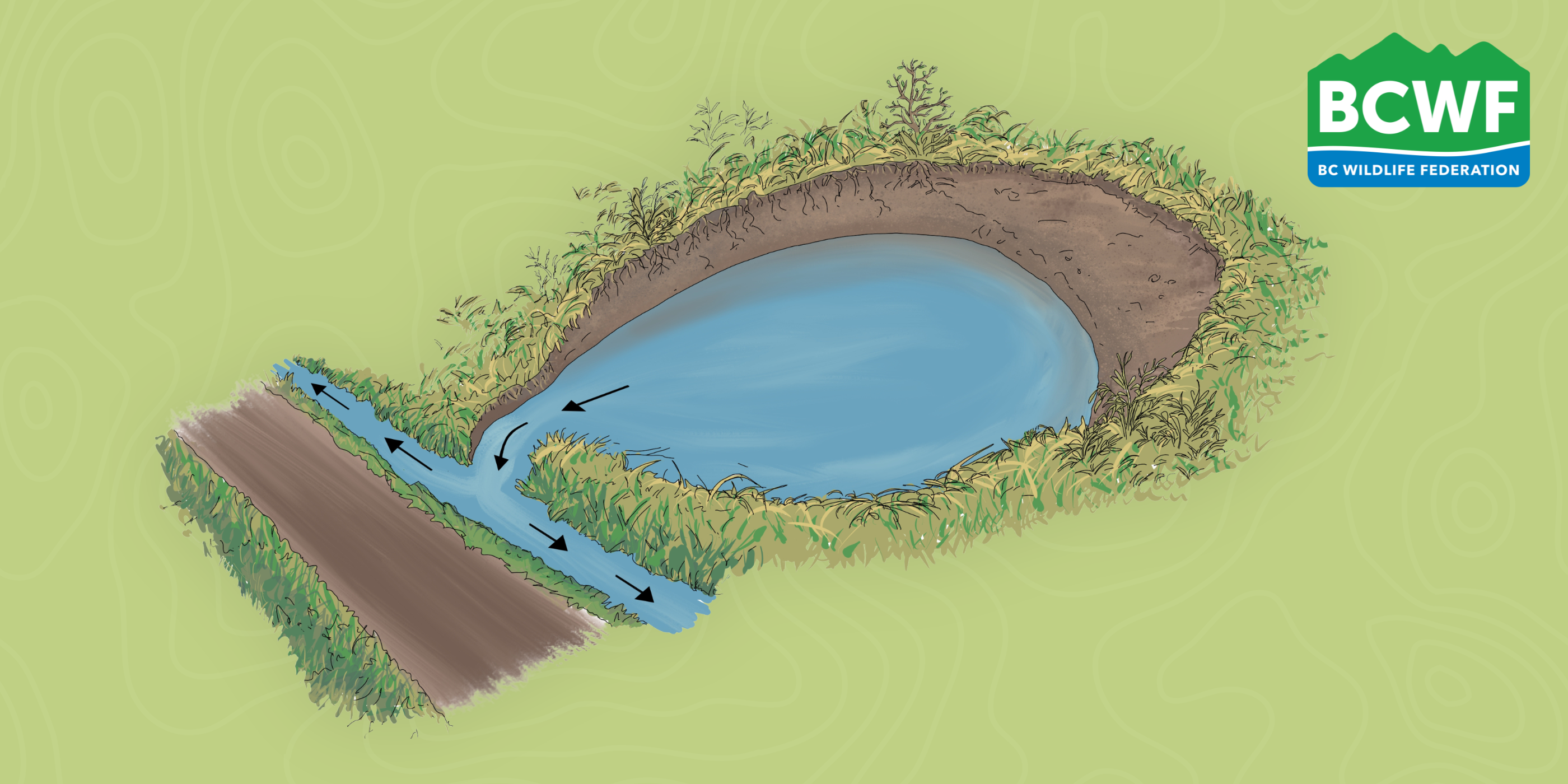
Road Impacts on Wetlands
Across British Columbia, roads often cross or run alongside wetlands. When this happens, they can change how water moves across the land and reduce habitat for fish and wildlife. Wetlands provide year-round food, cover, and water for a diverse range of fish and wildlife species, including moose, elk, waterfowl, salmon, and beavers. They also support…
-
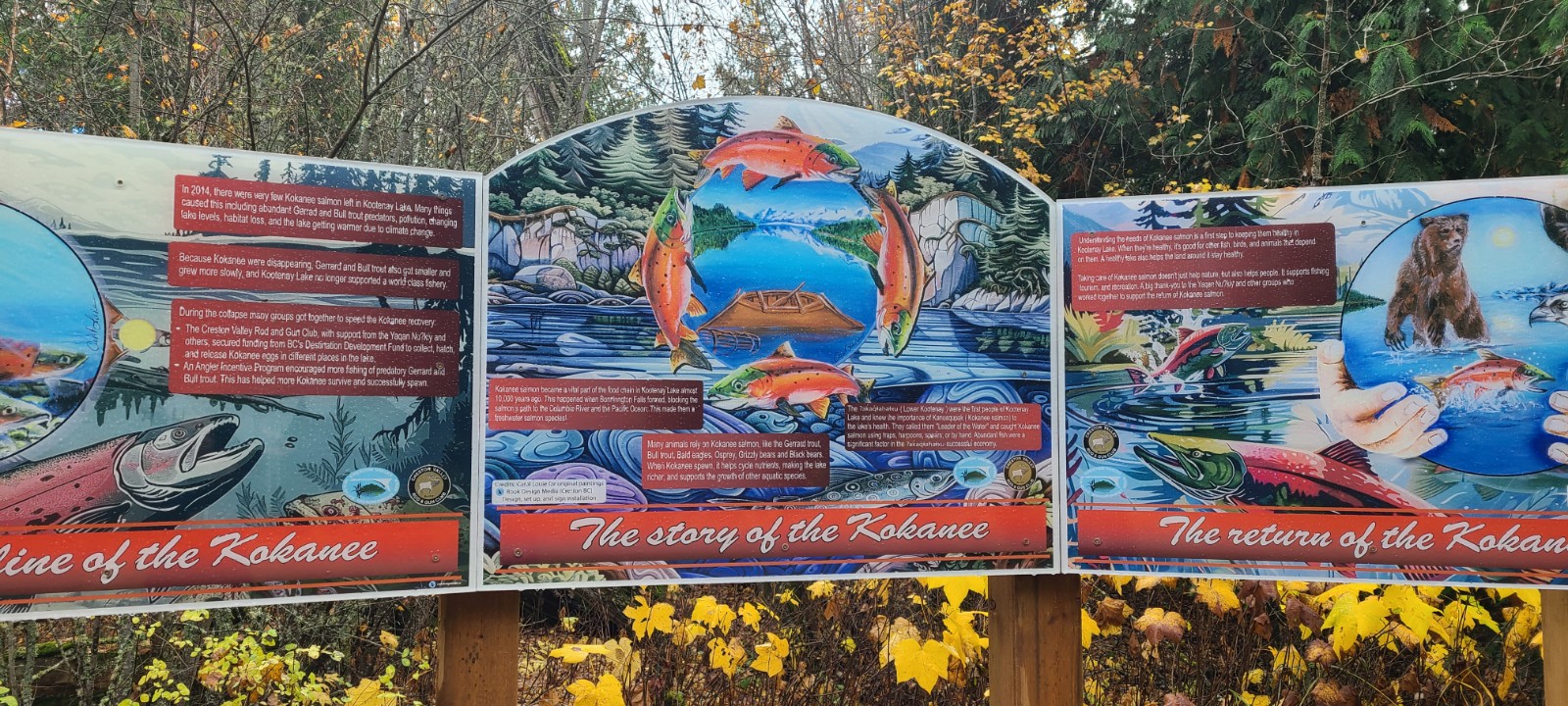
Creston Rallies to Restore Kootenay Lake’s Kokanee Salmon
Kootenay Lake’s Giants of Gerrard rainbow trout once routinely grew to an astonishing 30 pounds, but a decades-long ecological crisis triggered by hydro developments dating back to the 60s badly disrupted the lake’s Gerrard and Kokanee salmon populations. Now, an ambitious grassroots project spearheaded by the Creston Valley Rod & Gun Club is fighting to…
-
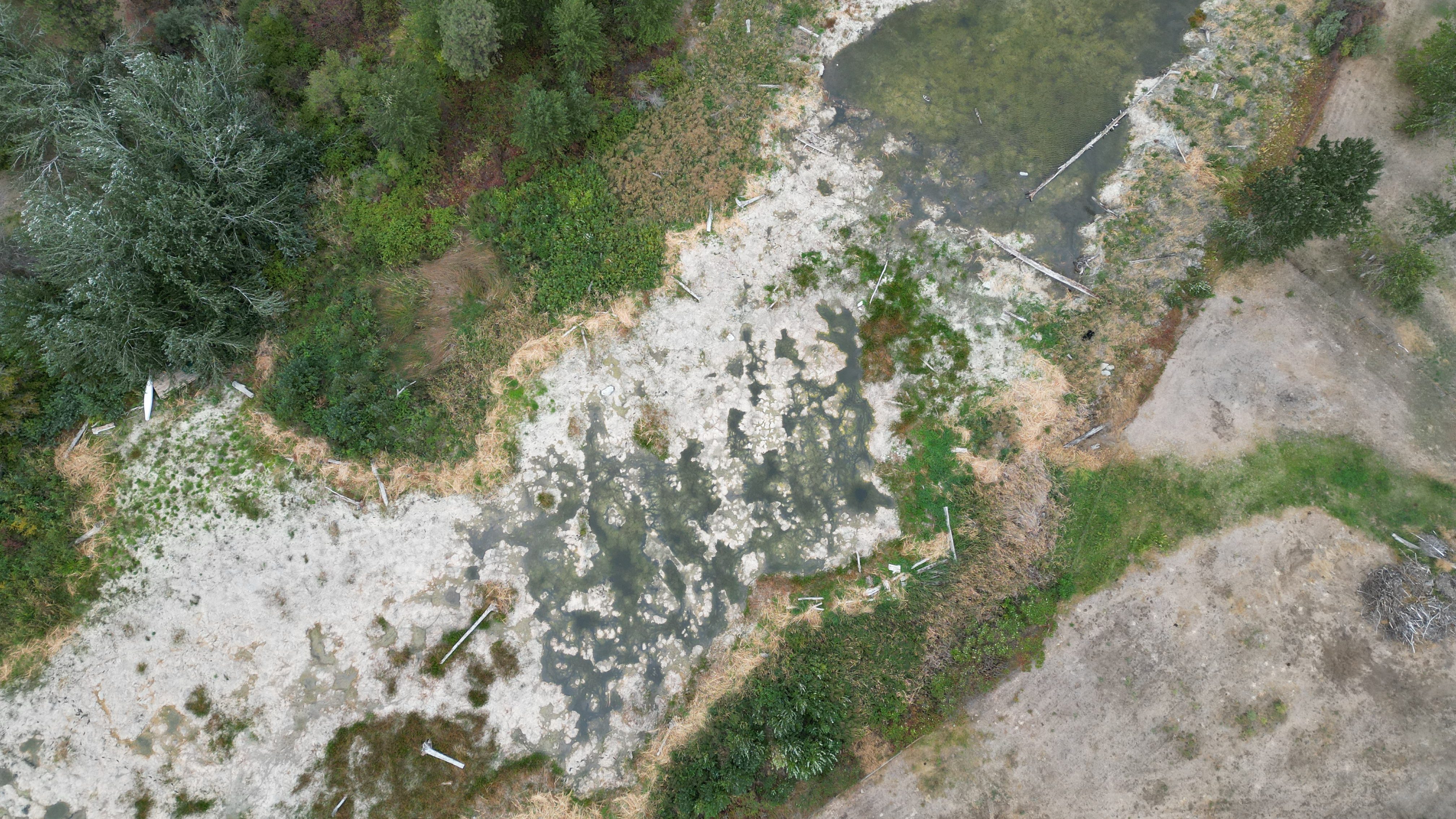
Low Water at Ginty’s Pond Highlights Need for Continued Investment in Watershed Restoration
For nearly four decades, wildlife biologist Al Peatt has kept a close eye on Ginty’s Pond, a wetland in the semi-arid, desert-like climate of B.C.’s Similkameen Valley. In 1990, under his leadership as one of the founding directors of the Southern Interior Land Trust (SILT), the organization acquired the property to protect its wildlife habitat…
-
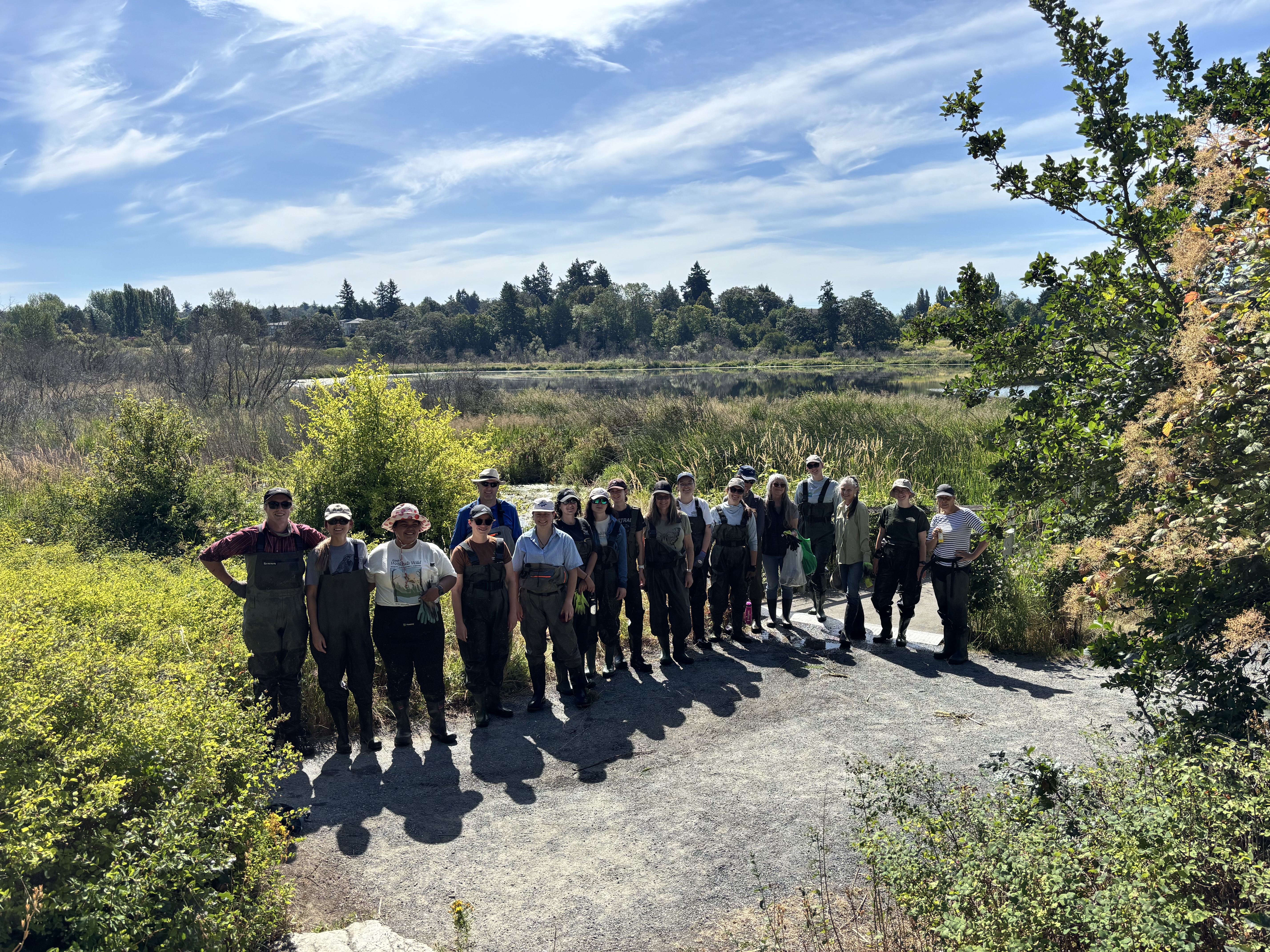
Building Wetland Stewardship Skills in Victoria B.C.
This July, the B.C. Wildlife Federation’s Wetland Education Program (WEP) facilitated a 2.5‑day Wetlandkeepers workshop in Victoria, B.C., in partnership with the Bilston Watershed Habitat Protection Association and Swan Lake Nature Sanctuary at Swan Lake Christmas Hill Nature Sanctuary—a living classroom rich with native plants, visiting and resident birds, and even a Western Painted Turtle.…
-

Understanding Beaver Dam Analogues — Q&A with Jennifer Rogers
Restoring streams, floodplains, and wetlands doesn’t always require heavy machinery. Sometimes, simple, nature-based solutions are the most effective. That’s the idea behind low-tech process-based restoration (LTPBR)—an approach that uses natural materials and processes to support ecosystem recovery. Two widely used techniques involve building simple, hand-crafted structures inspired by nature: Beaver Dam Analogues (BDAs) and Post-Assisted…
-

Upcoming Event — Virtual Tour of Canada’s Largest Indigenous-Led Wetland Restoration
Event Cancelled — Please check Norman Allard’s LinkedIn profile for rescheduling updates in the coming weeks. Inside Canada’s Largest Indigenous-Led Wetland Project Virtual Live Tour and Q&A with Norman Allard, Community Planner for Yaqan Nukiy (Lower Kootenay Band) Date: June 20, 2025Time: 12:00 p.m. – 1:00 p.m. PSTWhere to watch: www.youtube.com/@ReconnectExperience Join Norman Allard, Community Planner…
-
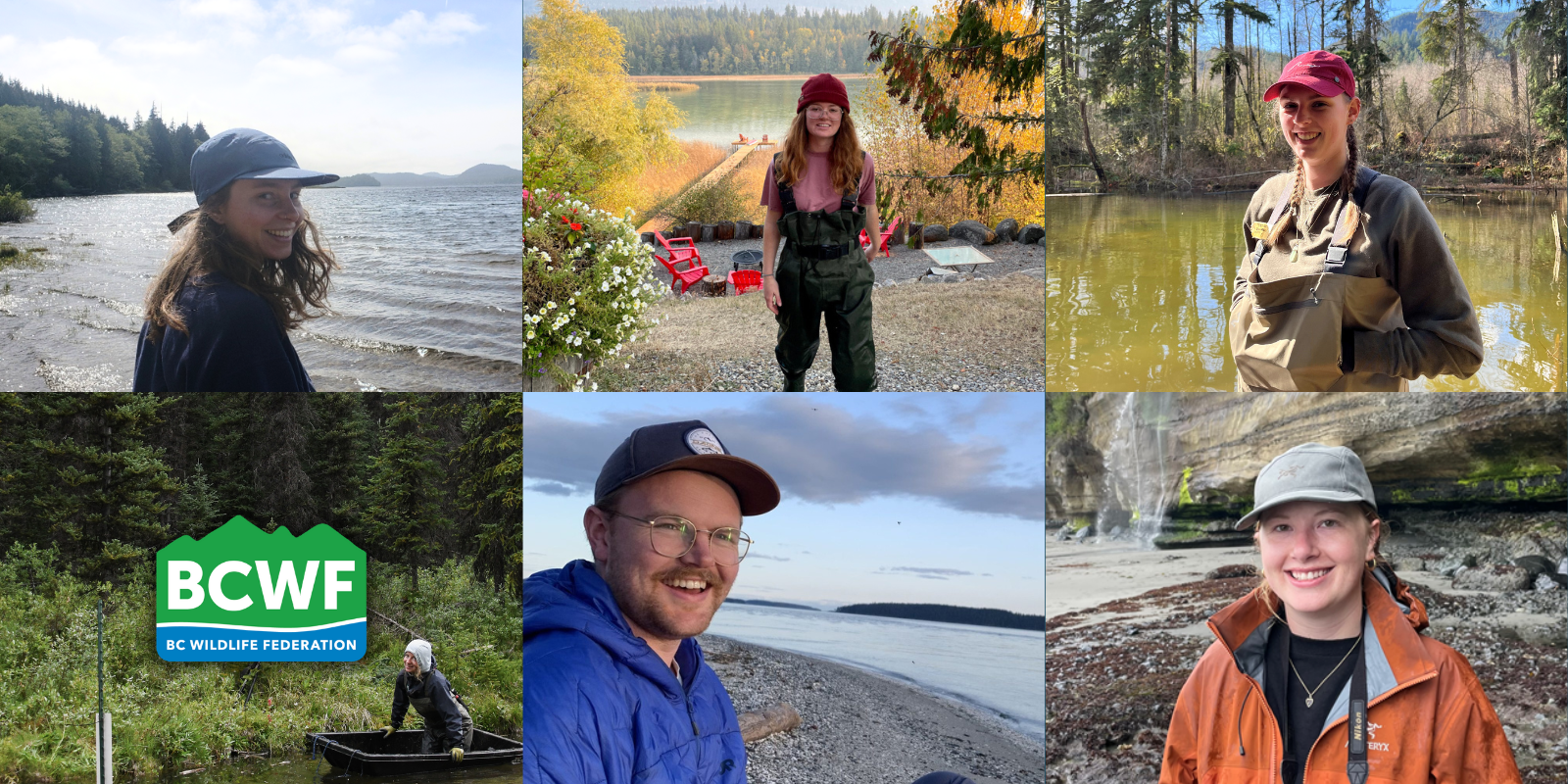
Welcome to the Team! Meet Our New & Returning Conservation Stewardship Staff
As the summer field season kicks off, we’re excited to welcome back several dedicated members—and introduce one new face—to the B.C. Wildlife Federation’s Watershed Team (aka the Conservation Stewardship department)! Sabine Rankin – Junior Restoration Technician Welcome to the team, Sabine! Sabine Rankin holds a B.Sc. in Biological Sciences from Simon Fraser University with a…
-

Assessing Road Impacts on Wetlands in Northern B.C.
Introducing BCWF’s RIWHA Tool Across British Columbia, roads and industrial infrastructure continue to reshape wetland ecosystems—this is especially true in northern B.C., where decades of hydroelectric development and land-use change have left lasting marks on the landscape. To better understand and respond to these impacts, the B.C. Wildlife Federation has launched a new tool: the…
-

Celebrating World Water Day 2025 — Protecting B.C.’s Watersheds
“If there is magic on this planet, it is contained in water” – Loren Eiseley Water connects us all—it nourishes ecosystems, sustains communities, and shapes the landscapes we call home. This World Water Day, we recognize the importance of protecting and restoring our freshwater resources in British Columbia. From wetlands and rivers to glaciers and…
-
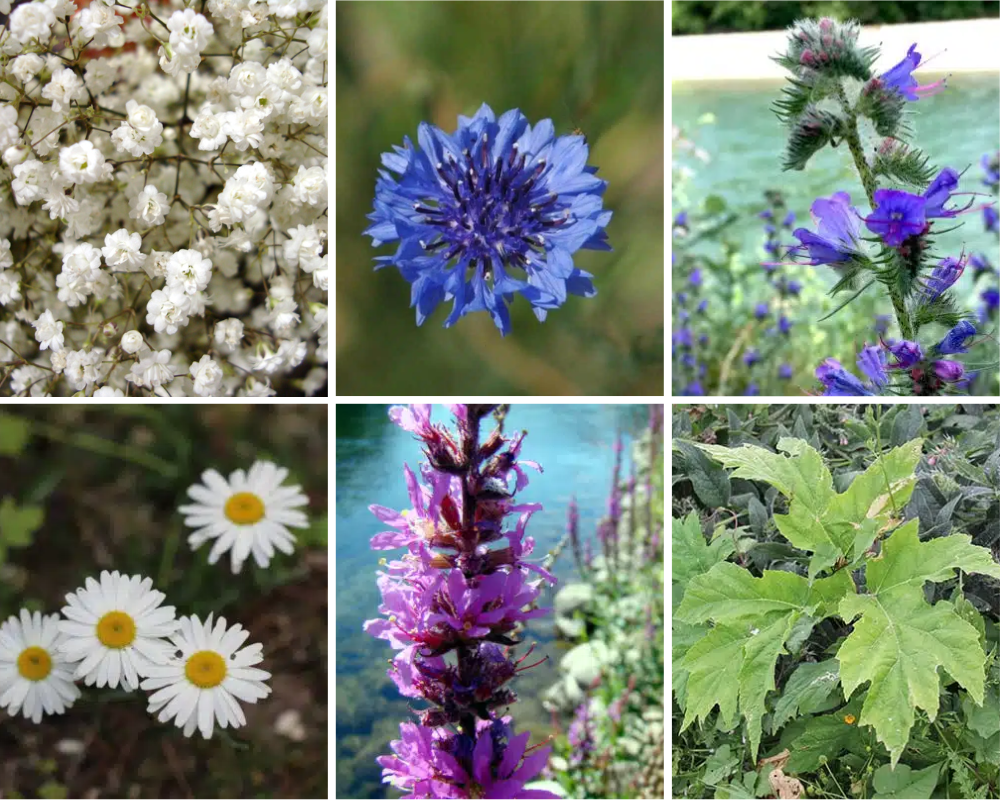
Common Wetland Invasives
In recognition of National Invasive Species Awareness Week 2025, the B.C. Wildlife Federation is highlighting the growing threat of invasive species in B.C.’s wetlands. Since 1996, the BCWF has been a leader in wetland conservation, working to protect, restore, and spread the word about these critical ecosystems across the province. Wetlands play a crucial role…