On this April 7th, International Beaver Day—a day some of our staff believe should be an international stat holiday—we recognize the vital role beavers play in shaping and restoring ecosystems. These remarkable rodents are nature’s engineers, creating wetlands that support biodiversity, improve water quality, and help mitigate the effects of climate change. But what happens when a beaver is orphaned, injured, or displaced?
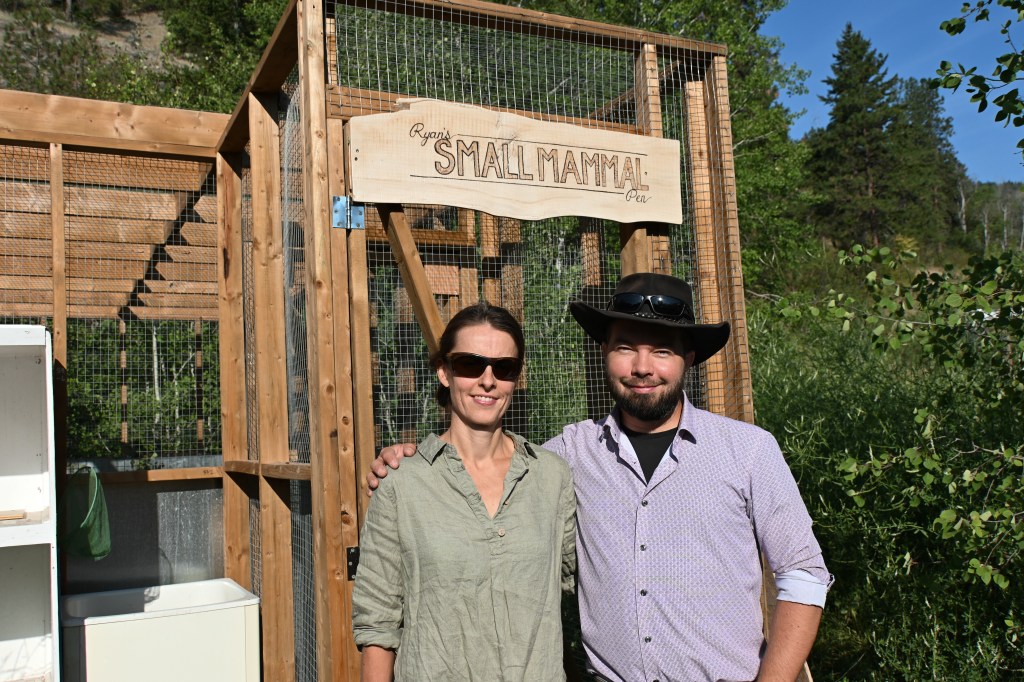
That’s where the Interior Wildlife Rehabilitation Society (IWRS) steps in. Founded to address the lack of wildlife rehabilitation services in B.C.’s southern Interior, the IWRS provides critical care for native wildlife, including beavers in need. At the helm of this work is Eva Hartmann, a dedicated veterinary technician and wildlife rehabilitator whose passion for animals has taken her across the world, from Germany to Canada, in pursuit of her wildest wildlife dreams.
In honor of International Beaver Day, we connected with Eva to learn more about the challenges and rewards of rehabilitating beavers, how IWRS is helping to rehome “nuisance” (ie. unwanted) beavers in restored wetlands, and what people can do to support this essential work.
Read on as Eva shares insights into the fascinating world of beaver rehabilitation and what it takes to give these ecosystem engineers a second chance at life.
Q: Can you tell us about the Interior Wildlife Rehabilitation Society and what inspired you to start this work?
Our society was founded to fill the gap in care for injured, sick, and displaced native wildlife in B.C.’s southern Interior. I’ve spent years as a veterinary technician by day and a wildlife rehabilitator by night.
Originally from Germany, I’ve worked with animals worldwide. In my twenties, I earned a bachelor’s in Ecosystem Management before immigrating to B.C.
Through my work, I’ve learned to care for injured and orphaned wildlife, often arriving in cardboard boxes, chirping and scratching. Most veterinary clinics are not equipped or authorized to provide long-term treatment for wildlife, and in many cases, they are required to euthanize animals that cannot be immediately released. This is what led me to establish this society.
Now, I’m eager to advance wildlife rehabilitation in my community. With boots on the ground and head in the clouds, I believe great things happen when veterinary professionals, biologists, conservationists, and naturalists work together.
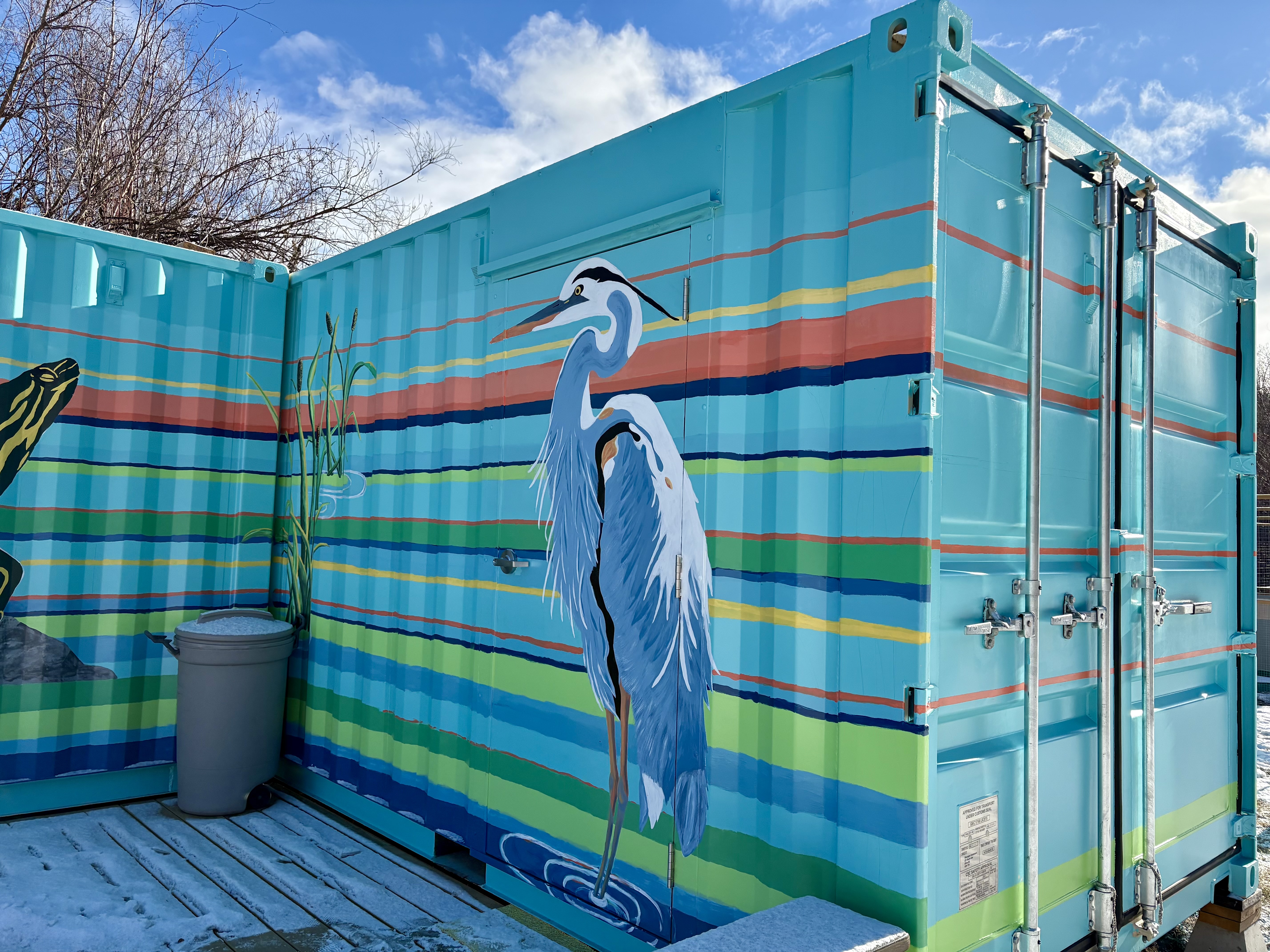
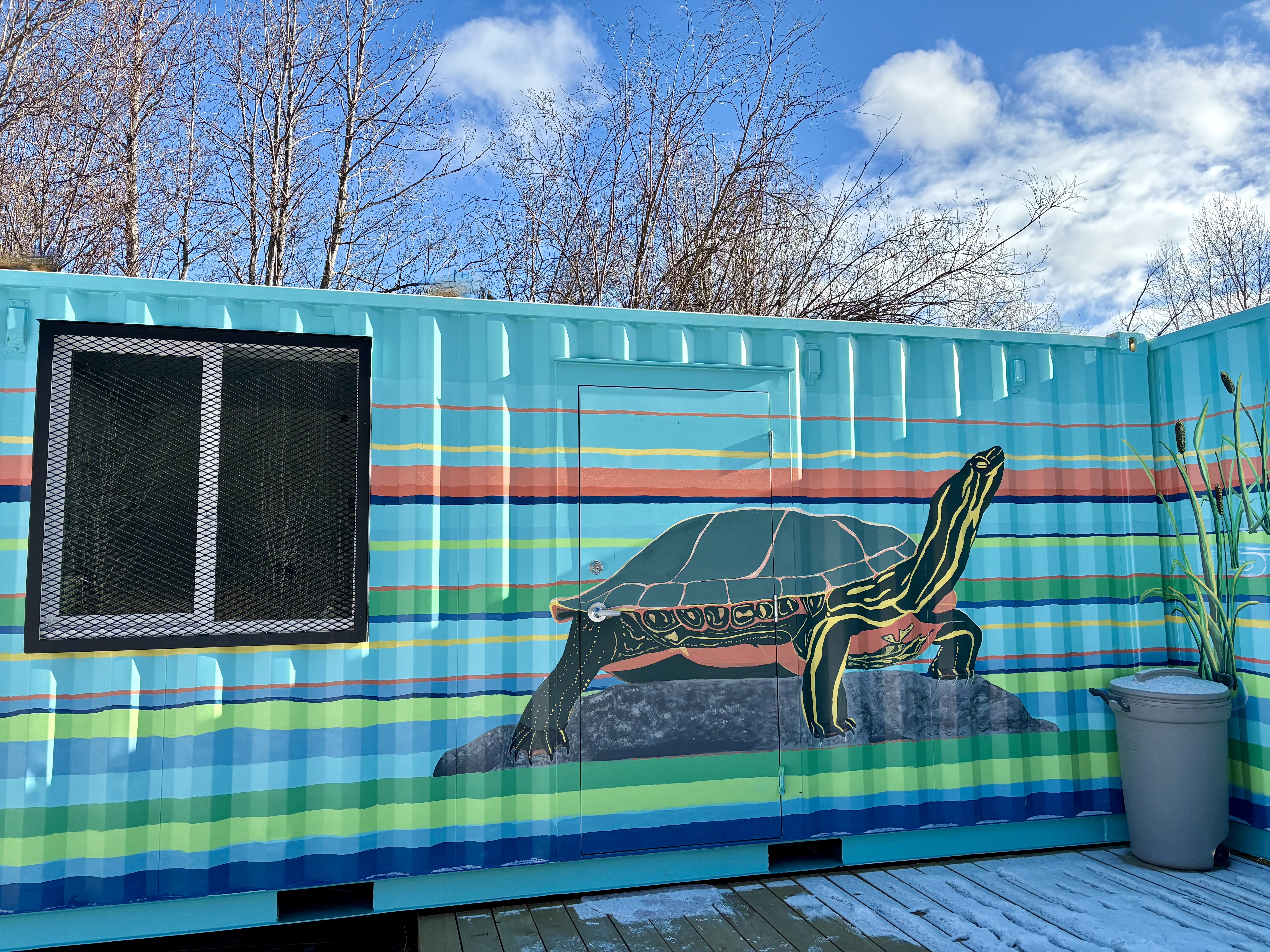
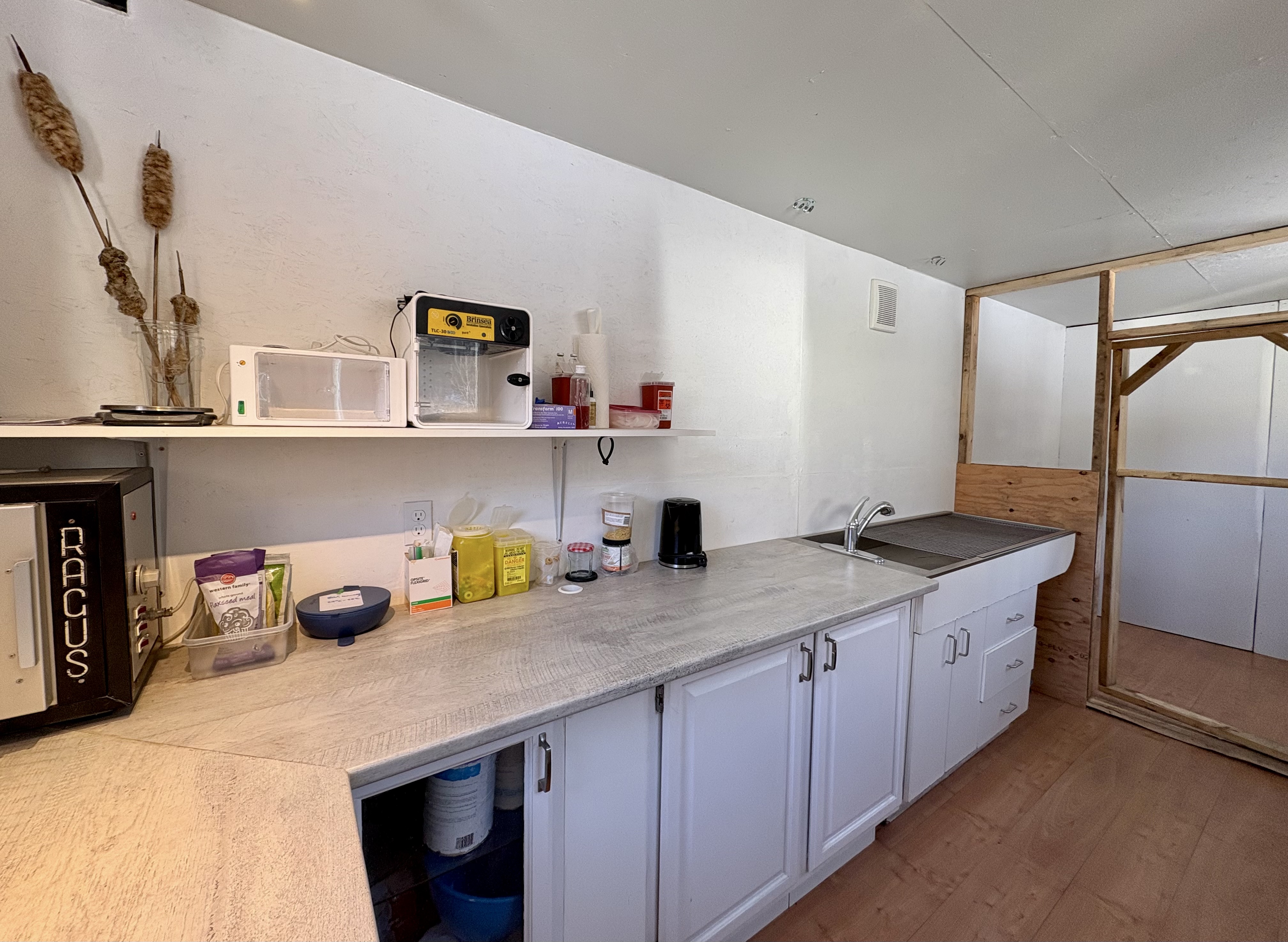
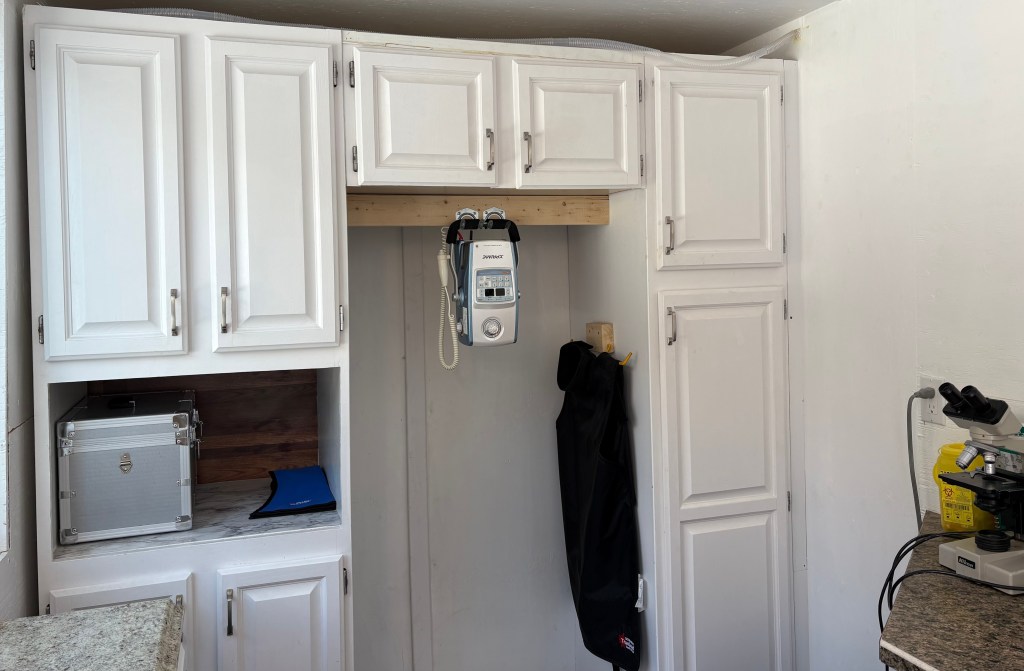
Container art all done by dedicated IWRS volunteers.
Q: What does the rehabilitation process for beavers look like from rescue to release?
We raise orphaned beavers and also care for live-trapped and “nuisance” beavers needing pairing for relocation. Adults or entire beaver families stay with us for about two weeks, while orphaned beavers may remain for up to two years.
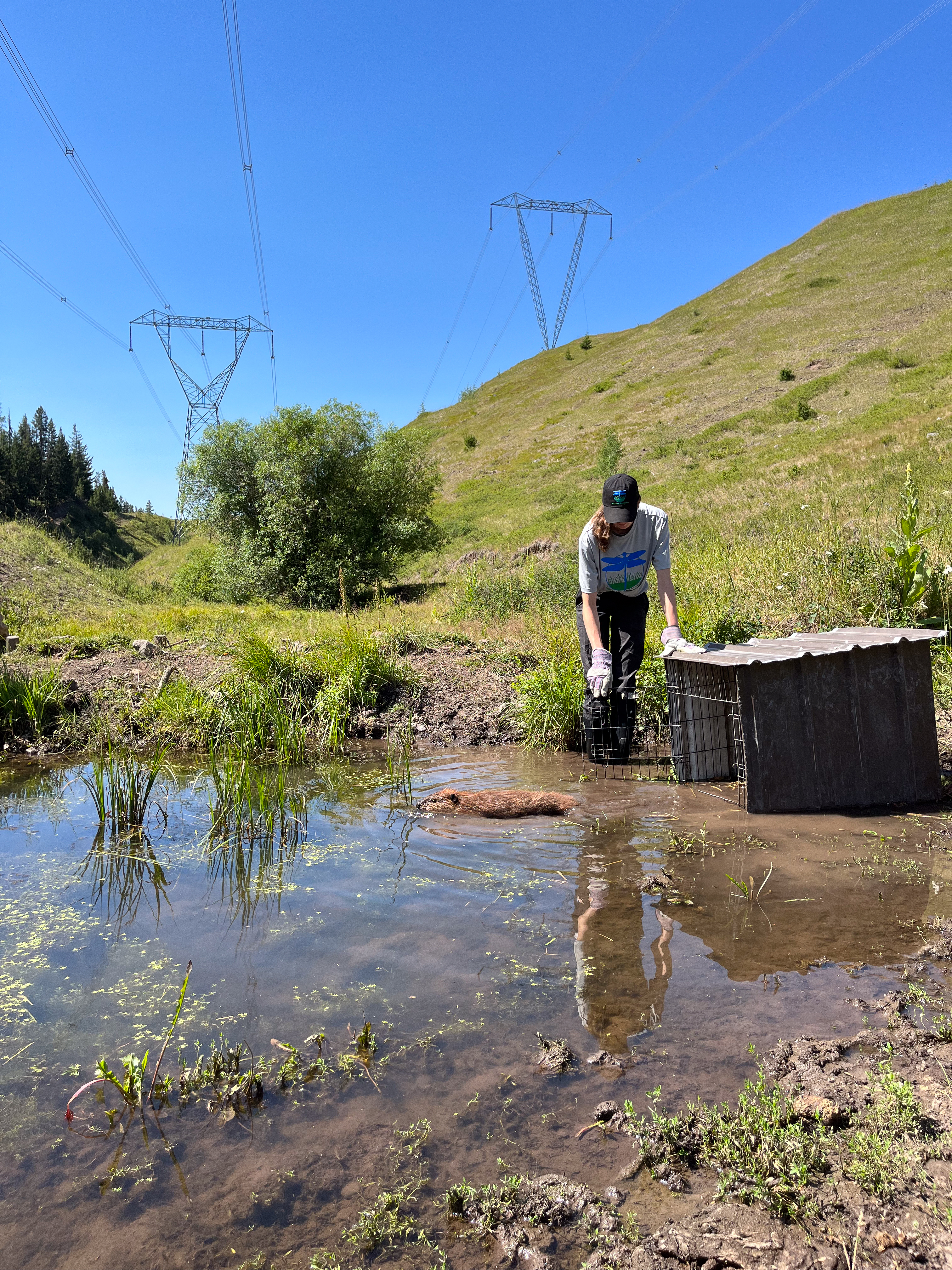
New arrivals receive a health check and a brief isolation period. Nursing kits (ie. baby beavers) are fed beaver formula until they are 10 weeks old and are gradually paired into potential mating pairs. “Nuisance” beaver families and individuals typically arrive one by one, as trapping multiple beavers at once is unlikely. We house them together as soon as possible and, once we have a group, release them into a carefully selected wetland habitat—often alongside project partners which often include the Nicola Valley Institute of Technology, the B.C. Wildlife Federation, and local First Nations.
Overall, our goal is for our beaver releases to enhance and expand habitat naturally.
Our success in bringing back beavers for wetland creation and wildfire prevention is thanks to our partners and land stewards. Moving forward, we want to encourage landowners to work with these important semi-aquatic animals instead of using repeated kill-trapping. That’s why part of our work is focused on emphasizing public education; to help reduce land-use conflicts between people and beavers, and find solutions for unwanted beavers.

Q: What are some of the biggest challenges in rehabilitating beavers, and how do you address them?
Rehabilitating beavers is a process that requires more logistics, resources, time, and know-how than caring for other wetland species like waterfowl or turtles due to their complex behaviors. This is because their rehabilitation involves not only medical care but also providing appropriate environments that allow them to practice the natural behaviors essential for their survival.
Orphaned beaver kits need to be raised longer than any other wildlife species and will not survive if released under two years of age. This means they must be overwintered. Since they require year-round water access, we must be creative with water filtration, winter heating, providing a natural beaver diet long-term, and keeping them mentally stimulated in captivity. Beavers dig, chew, climb, poop only in water, and love to plug drains with sticks or barricade doorways between indoor and outdoor pens with logs and bedding materials.
However, housing is only one challenge. Finding appropriate release sites, preparing the site for their arrival, obtaining release permits, and building a program to monitor their post-release progress all pose additional challenges that we don’t encounter with other species we rehabilitate.
Q: What’s the most rewarding part of working with beavers?
The most rewarding part of working with beavers is knowing we can partner with them. It’s amazing to see how hard they work to create wetlands where they can thrive and feel safe.
We see it as a privilege to witness this up close—a peaceful herbivore making a difference in the lives of many other species, including humans.
Q: Can you introduce us to the beavers currently in care and share a bit about their stories?
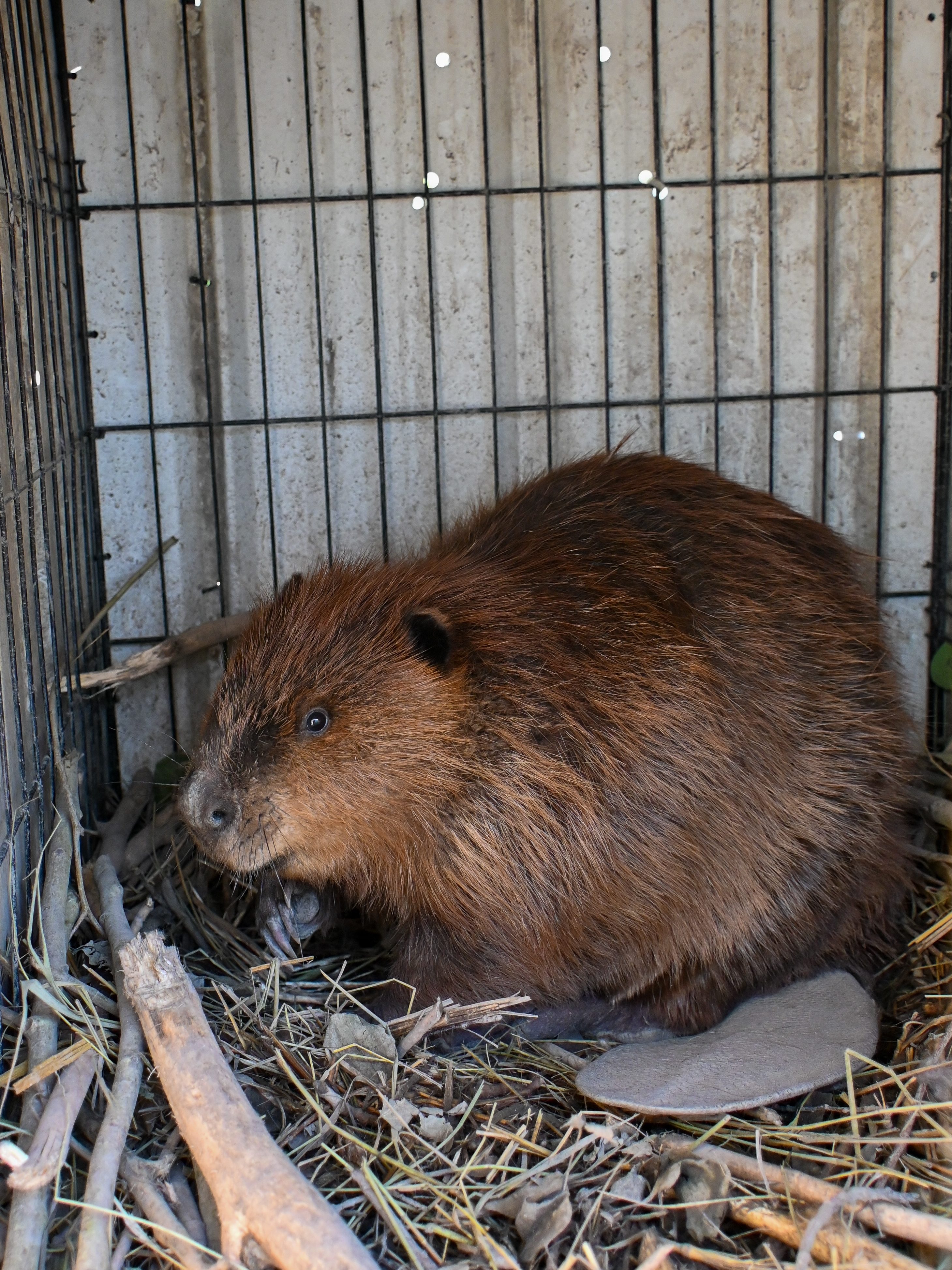
The beavers currently in our care are two unrelated orphaned kits, now half a year old. Their names are Tiny Tina (formerly Tiny Tom) and Baby Nelson. We received them separately from two other wildlife rehabilitation centers in southern B.C., arriving within a few weeks of each other. Although they are unrelated, they are similar in age—approximately three weeks old when they arrived.
In the wild, beaver kits at this age wouldn’t have emerged from the lodge yet; they would still be sheltered inside, nursing from their mothers. We fed them every four hours around the clock until they eventually began nibbling on poplar and maple leaves weeks later.
At first, they weren’t very fond of each other—especially Baby Nelson, who was quite grumpy. However, after a slow, weeks-long introduction, they are now housed together. We recently determined their genders and are happy to share that they are male and female. Because of this, we plan to release them together when they reach dispersal age and are capable of breeding in the wild.
If you’re curious to know more about Tiny Tina (Tom), Baby Nelson, and the other beavers in our care—including what they’re up to right now—check out our IWRS Beaver Live Stream on YouTube at the following link: Interior Wildlife – BeaverCam Live Stream YouTube.
We have also created a series of educational videos on our YouTube channel for anyone interested in learning more as we raise Tiny Tina (Tom) and Baby Nelson together.
Learn more about the journey of Tiny Tina (Tom) and Baby Nelson below:
Q: How can people support the work you do at IWRS?
We rely on private donations, grants, and sponsorships for funding. Community support is essential. To volunteer, apply online; our needs for specific skills change periodically. Currently, our beaver program seeks monthly sponsors for our BeaverCam Live Stream.
We also have an Amazon wishlist where you can purchase essential items for our busiest season—springtime, when we care for many displaced baby wildlife, often orphaned due to human-related incidents like road accidents. Your support helps us provide the necessary care for these vulnerable animals.
If anyone particularly likes to see our capacities to grow and offers to give a portion of their will for wildlife care and housing wild wetland species, know that we will ensure such a donation to us is put to good use for years to come and we offer tax receipts for these too.

Learn more about the IWRS at www.interiorwildlife.ca.
 BCWF Watershed Team
Leave a comment