
The B.C. Wildlife Federation is turning to expert engineers—otherwise known as beavers—to help protect our province’s precious land and water resources.
Our 10,000 Wetlands project aims to use beaver-based restoration to enhance watershed resilience by harnessing the industrious skills of beavers, a species that has faced near eradication. The project aims to build dozens of Beaver Dam Analogues (BDAs) — human-made structures designed to mimic the water-retention functions of natural beaver dams.
BDAs will mitigate floods, droughts, and wildfires that threaten our province year after year, leveraging a restoration method that is both cost-effective and efficient.
Guided by BCWF Beaver Restoration Assessment Lead Jennifer Rogers, this project is collaborating with First Nations, environmental NGOs, and government bodies to assess potential restoration sites, and to craft protocols and processes with a goal of installing 100 BDAs by the end of 2025.
Learning and Collaboration
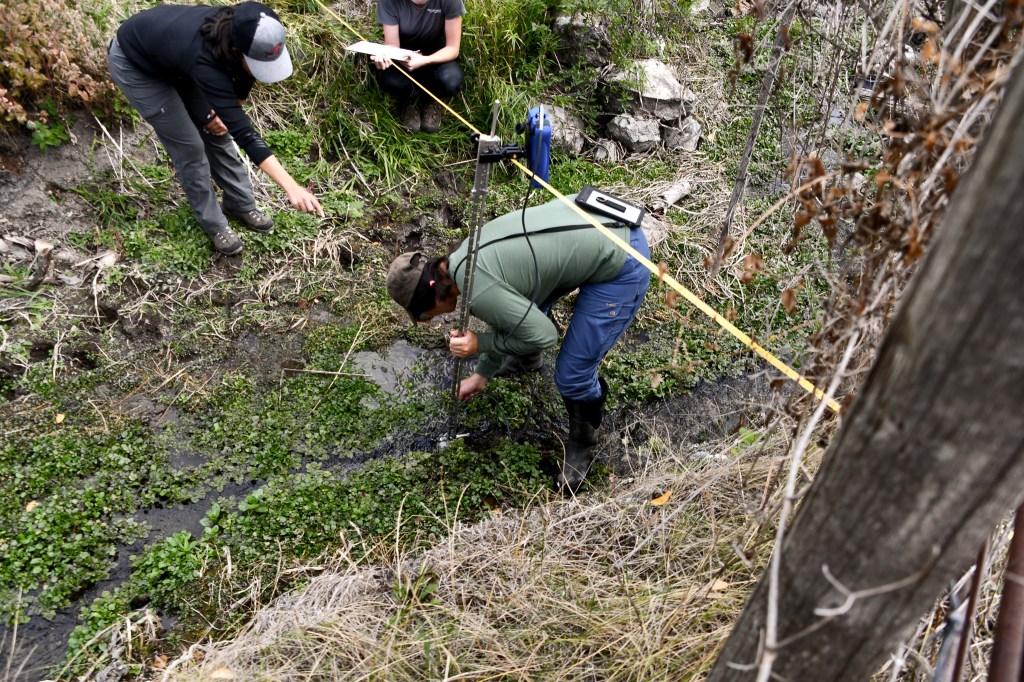
In October 2023, the BCWF, Fisheries and Oceans Canada (DFO), and the Nature Trust of BC (NTBC) joined forces to create standardized hydrometric monitoring procedures to ensure that the impacts of our BDAs are meticulously assessed.
The training workshop focused on ways to assess the quantity and quality of surface water and groundwater. Drone flights were used to assess the topography and general conditions of the site.
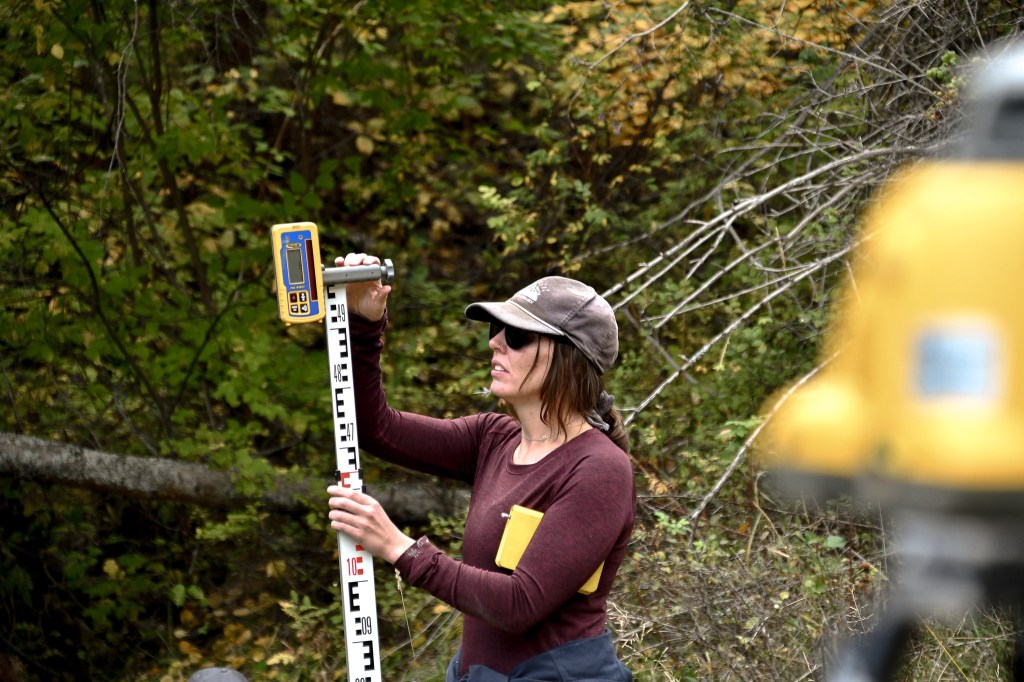
“When it comes to monitoring surface water, we are looking to determine how much of a bump in streamflow these BDAs can cause when you build a few of them together,” said David Reid, Senior Restoration Science Coordinator with the Restoration Centre of Expertise at DFO. “This involves taking measurements up and down the stream both before and after you install the BDA. This practice allows field technicians to compare data over time to get a better understanding of the outcomes.”
Where BDAs are installed, we expect the water table near the structure will rise, giving marsh vegetation and other plants a better chance to get re-established where erosion has left the channel banks too steep.
Thermal imaging of the site was conducted to monitor water temperature changes before and after the installations. The thermal diversity enhanced by beaver activity benefit aquatic species, including salmonids.
The 10,000 Wetlands collaboration with beavers is an innovative adaptation that blends traditional knowledge with modern stewardship to restore natural processes. It is our hope that ecological ingenuity will renew our appreciation for Canada’s iconic beaver, while making our land and watersheds more resilient.
What are Beaver Dam Analogues?
Beaver Dam Analogues (BDAs) are man-made structures designed to emulate the water-retention function of natural beaver dams. By promoting natural processes essential to stream recovery, they integrate seamlessly with the surrounding ecosystem.
Typically constructed by hand using locally sourced, natural materials, BDAs often involve pounding untreated wooden posts into the streambed, weaving woody vegetation through the posts, and packing the dam with vegetation, sediment, and cobbles. Multiple structures, referred to as a complex, are installed to mimic the way beaver habitats naturally occur across landscapes.
As temporary structural additions to streams, BDAs require maintenance over time. Where beavers are present, human maintenance may be minimal, as the animals may adopt and maintain the structures themselves. However, in areas closer to human settlements, encouraging beaver colonization is generally avoided.
This story, by Jamie Long (Conservation Stewardship Communications Coordinator), first appeared in the JUL/AUG 2024 issue of BC Outdoors Magazine in our member exclusive insert. Become a BCWF member today to get our news delivered directly to your mail box at bcwf.bc.ca/membership.
 BCWF Watershed Team
Leave a comment