Living off the land is fundamental to rural and First Nations communities. Caring for the land is essential to the traditions and practices that encompass hunting, fishing, and foraging.
The B.C. Wildlife Federation and Indigenous communities have made considerable progress toward a shared vision of maintaining healthy fish and wildlife populations. By weaving Indigenous values and perspectives into its approach, the BCWF has made notable strides in fulfilling its mission to safeguard and promote responsible environmental use for today and future generations.
Engagement Leads to Stronger Relationships
Indigenous Liaison Diana Cote and her assistant, Morgana Eugene, guide the Federation’s collaborations. Diana, a member of the Ktunaxa Nation and the Shuswap Band, possesses a deep understanding of the unique cultures of the Ktunaxa and Secwépemc. Since joining the team in 2021, she has been actively establishing connections between the BCWF and Indigenous communities across British Columbia. Morgana, who recently joined the team from the ʔaq̓am reserve within the Ktunaxa territory, maintains strong ties to the Ktunaxa, Secwépemc, and Stó:lō communities. Together, they support Federation staff in working respectfully with Indigenous partners, ensuring customs are honored and communication remains strong.
“The initial and crucial step lies in respectfully engaging with our esteemed Elders, as they embody the wisdom and knowledge of the land,” said Cote. “Their support is of utmost importance for us to progress and seize opportunities for training, education, and cross-cultural learning.”
To foster mutual understanding, Diana and Morgana pursue knowledge sharing with BCWF watershed teams and actively engage with youth, land guardians, and First Nations technicians. They also prioritize creating employment opportunities for First Nations youth to build technical capacity and future leadership in conservation.
Yaqan Nukiy Wetlands Restoration Project
The Yaqan Nukiy Wetlands Restoration Project exemplifies a successful partnership between the BCWF and a community deeply committed to weaving Indigenous knowledge systems into conservation work. Initiated in 2017 and led by the Yaqan Nukiy (Lower Kootenay Band) with technical advice and support from the BCWF, this project aims to restore 517 hectares of floodplains, streams, and rivers in the Creston Valley.
“These projects are of great importance to the band, both ecologically and because their language practices and culture are directly tied to the land,” said Norm Allard, the Lower Kootenay Band’s Community Planner. “These wetlands are a crucial component of their cultural identity.”
Since its inception, a variety of species have returned to the restored wetlands, including sandhill cranes, blue herons, Western painted turtles, and brown bats. The Band has also secured funding from governmental and non-governmental organizations to sustain its conservation efforts, supporting both ecosystem health and local employment.
“These areas are just as vital to the world as lakes and rivers,” said Allard. “They form a comprehensive system that integrates everything that uses land with everything that uses water.”
Engagement with Indigenous Youth
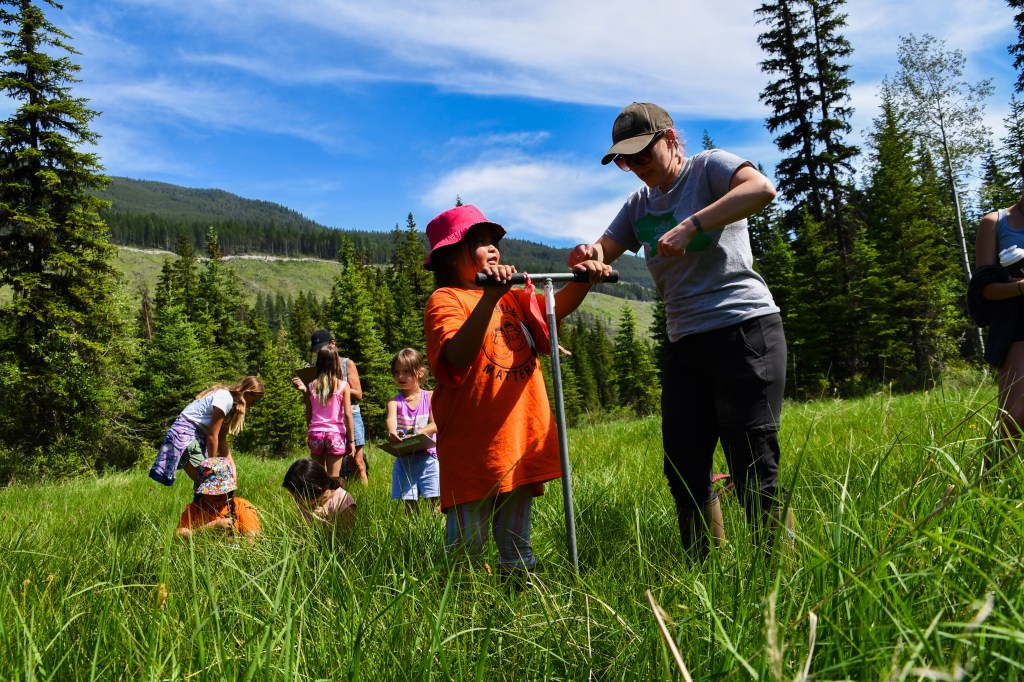
The BCWF recently hosted a multi-day Conservation Training Camp in collaboration with the Shuswap Nation and its youth. Participants experienced a comprehensive program blending scientific knowledge with traditional cultural practices, offering young people a glimpse into the many career opportunities available in conservation.
Workshops included plant and wetland sessions, wetland identification, fish and lake stewardship, archeology, wildlife identification, team building, and traditional hunting practices such as archery. Youth also participated in language lessons, drumming sessions, prayers, and campfire storytelling, ensuring a well-rounded experience deeply rooted in tradition and community connection.
Wetlands Restoration on Quadra Island
The Quadra Island Schoolyard Wetland Build shows how positive outcomes flow from weaving local First Nations’ values into conservation projects. In 2022, the BCWF secured funding to restore a wetland on school grounds. We Wai Kai First Nation land guardians led the archeological work, and community members joined students for a site tour and opening ceremony. The land guardians continue to support this project through contracts for invasive species removal and habitat enhancement.
By weaving Indigenous knowledge, values, and perspectives into restoration projects, we are better able to address conservation challenges by identifying where shared goals and priorities overlap. Through this shared understanding, we create opportunities for everyone to enjoy the outdoors and benefit from healthy habitat and abundant wildlife.
From First Nations-led watershed planning to BCWF-led stewardship workshops, collaborative efforts between First Nations and non-Indigenous British Columbians are essential to addressing the legacies of environmental degradation and the impacts of climate change. With a shared focus on wildlife conservation, healthy watersheds, and a sustainable future, these partnerships represent a promising path forward.
This story, by Jamie Long (Conservation Stewardship Communications Coordinator), first appeared in the SEP/OCT 2023 issue of BC Outdoors Magazine in our member exclusive insert. Become a BCWF member today to get our news delivered directly to your mail box at bcwf.bc.ca/membership.
 BCWF Watershed Team
Leave a comment