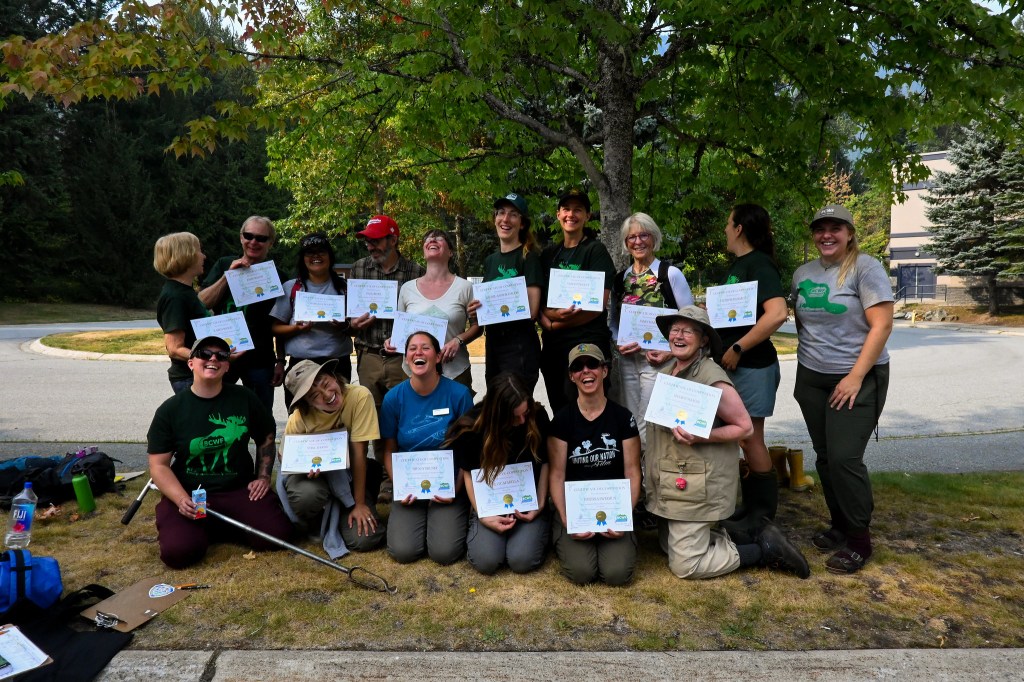
The Wetlands Education Program (WEP) runs several workshops throughout the year in order to engage and educate interested participants about wetlands. One of these programs is Map our Marshes (MoM). This is a 1.5 day workshop that focuses on entry-level technical and field skills for mapping smaller wetlands using free software, GPS, and your smartphone! This year, Maple Ridge and Whistler were the two hosted locations.
Mapping Maple Ridge
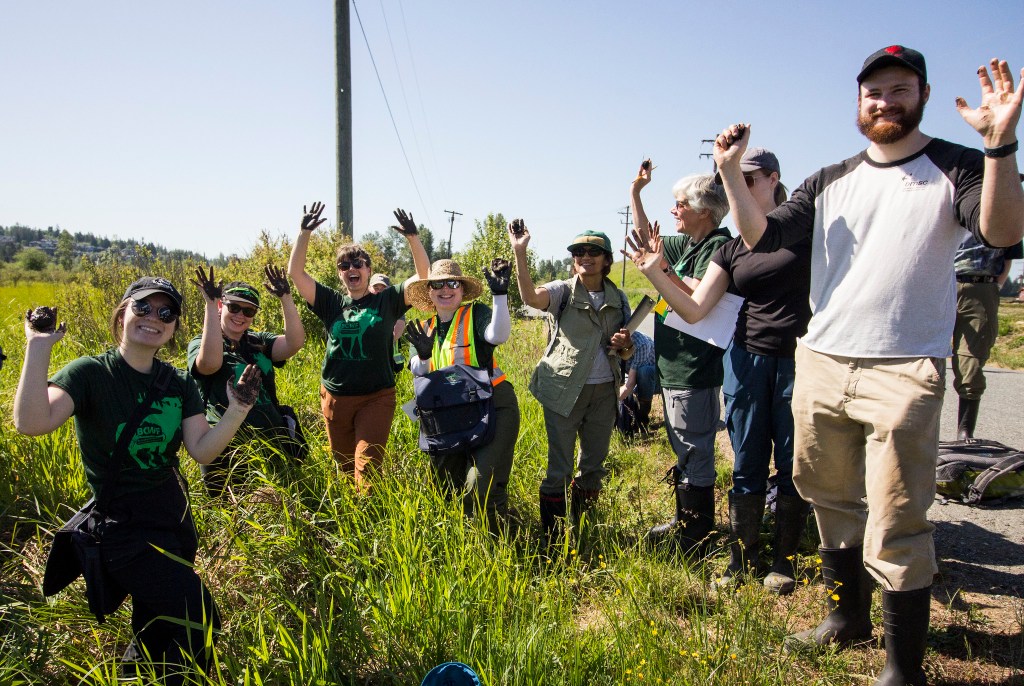
June 2nd – 3rd our team partnered with Alouette River Management Society (ARMS) to host the MoM in Maple Ridge.
During a classroom session on day 1, participants gathered learn about the wonders, classes, values, and losses of wetlands in British Columbia. With a focus on the importance of wetland functions and improving biodiversity, we learned about the significant number of wetlands that have been lost so far, and the factors that continue to contribute to that loss. It is imperative to protect any type of wetland that we see, no matter the size. Understanding how wetlands function and what we can do to prioritize their preservation is a key learning opportunity during any Map Our Marshes workshop.
Inviting guest speakers to join us provides a valuable opportunity to learn from a variety of experts in the field. In Maple Ridge, Blake Danis joined us from WildResearch and Simon Fraser University to share their extensive knowledge on amphibians. We looked at amphibians around the world and within our province and delved into the origins of many of our modern-day amphibians.
Lastly, we discussed B.C.’s red, blue, and yellow listed species to understand which species were of special concern, endangered, or under threat of extinction. Learning how to protect their habitat is an important step in preserving threatened and endangered amphibian species.
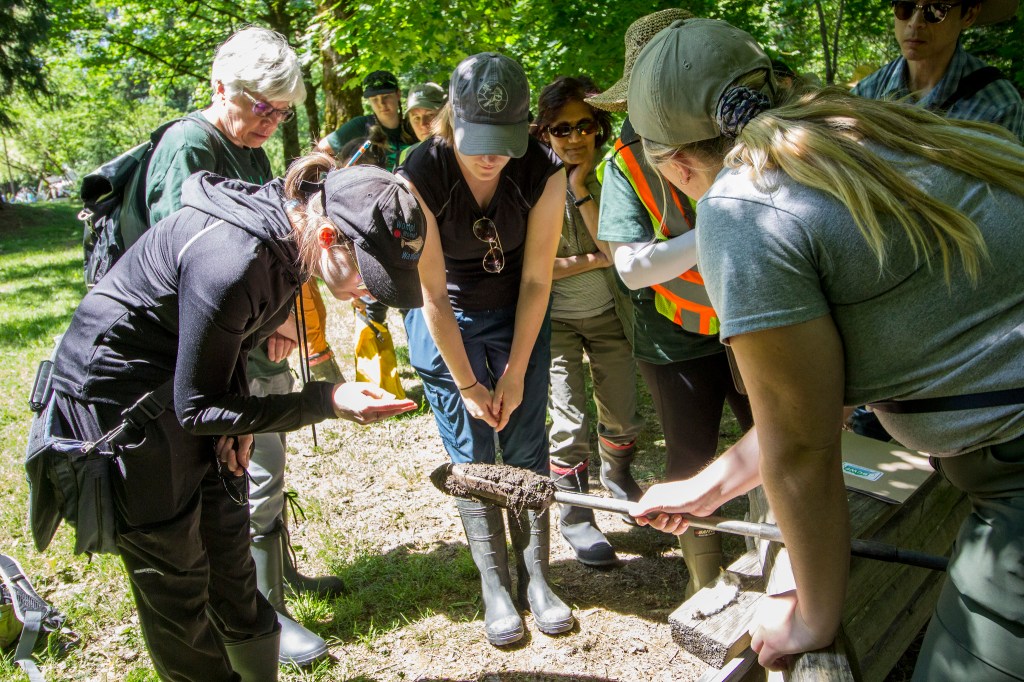
After a successful evening of learning, the next day was spent in the field where participants put newly improved identification skills to use. Our first stop was Blaney Bog, where the use of field guides and dichotomous keys aided participants in identifying the local vegetation. Using a soil auger, we were able to retrieve samples from the wetland and take a closer look at the differences between water-impacted soils and upland (dry-land) soils. Both the vegetation and soil data combined with a brief investigation of the water on site allowed us to classify the type of wetland.
The Wetlands of Whistler
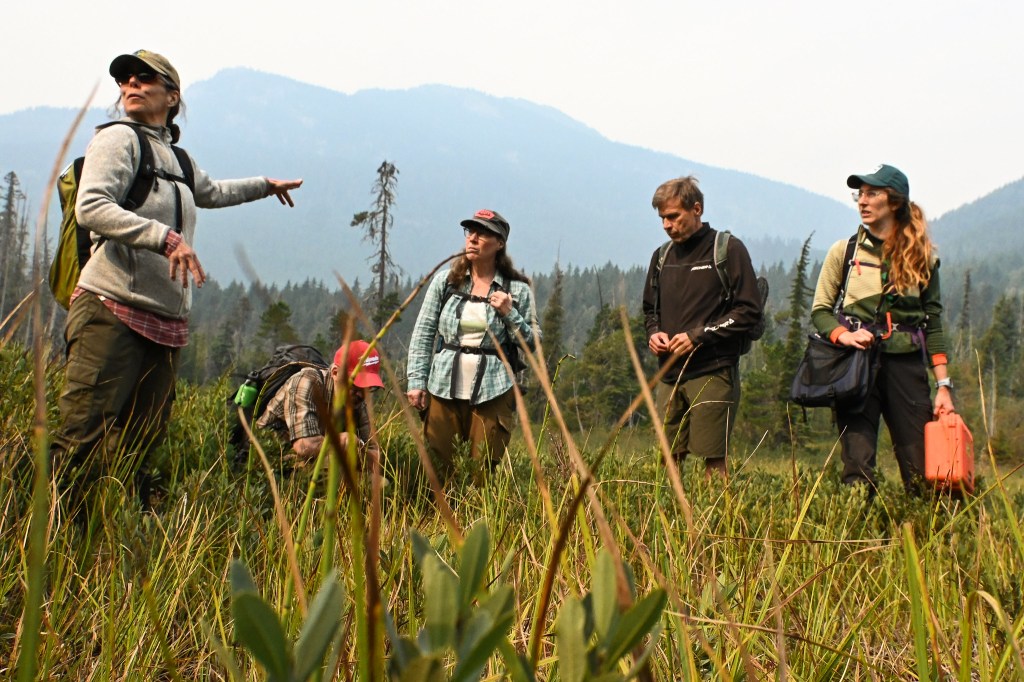
On August 19th and 20th, the Whistler Naturalists teamed up with the Wetlands Education Program to host our final Map Our Marshes workshop of 2023. Our classroom session offered participants a chance to get familiar with the incredible variety of wetland functions – and to get familiar with each other! After a round of introductions and presentations, we left ready for our day in the field.
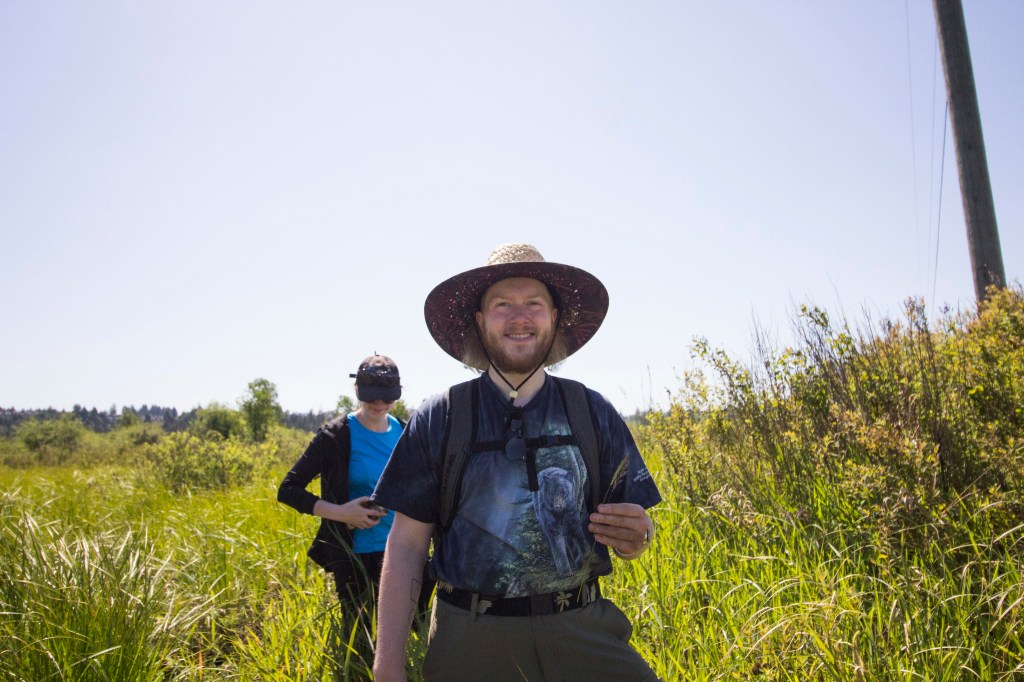
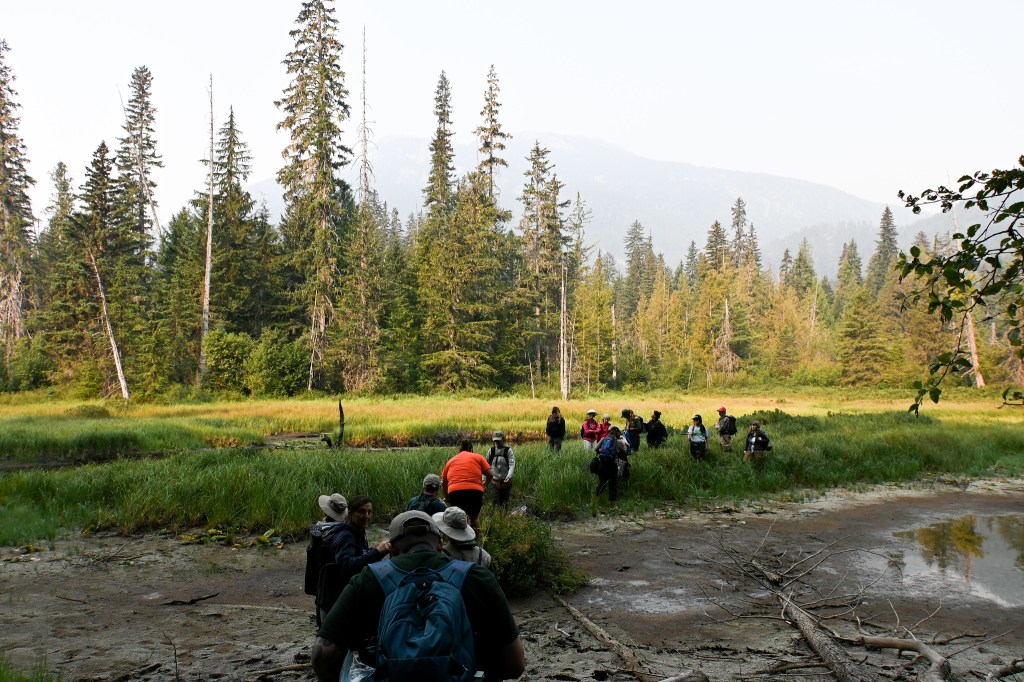
We began at Emerald Wetlands: a beautiful, accessible hike boasting an astounding variety of vegetation. This time we were joined by local naturalist Bob Brett, who led us through some of his work preserving local beaver habitat across Whistler. Evidence of beaver activity was everywhere – to the trained eye. Beaver-channels provided a small obstacle course on the way into the wetland, and dense mats of vegetation suspended on the water allowed participants to perfect their Bog Bounce. After a quick peek at the soils, it was on to vegetation identification!
Emerald Wetland offered even experienced vegetation identifiers a fun challenge. Sundews glittered across most of the site, interspersed with Bog Cranberries, Bog Myrtle, and one triumphant sprig of Hardhack. Participants also got to meet one of British Columbia’s Noxious Weeds: Water-Hemlock. We gave it a wide berth during our ID!
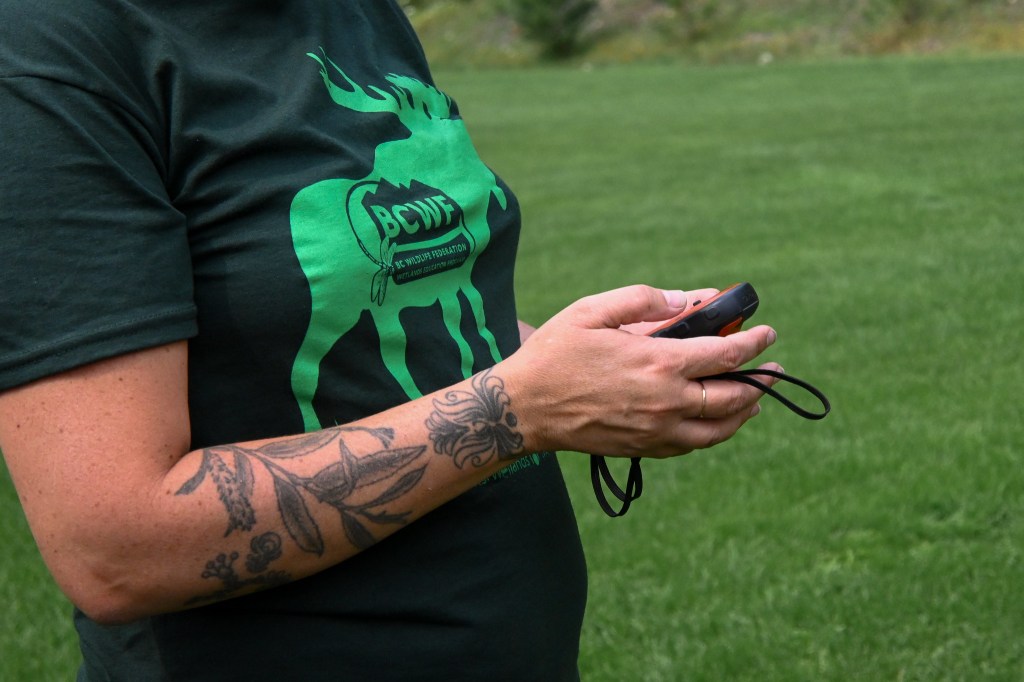
We finished out our day at Wedge Park, where we got to explore a spectacular Skunk Cabbage swamp and learn a bit about handheld GPS units and how they can be used to map and preserve sensitive ecosystems.
No matter your level of experience in the environmental world, Map our Marshes is a great way to get started on your wetland journey. We want to thank all the participants that took time to learn alongside us, and we’re eager to see what the 2024 season will have to offer.
To see more pictures from the workshops, click here!
Want to join us in the field? To learn about and register for upcoming webinars & virtual workshops, please visit WEP’s webpage.
These workshops were held in partnership with the Alouette River Management Society and the Whistler Naturalists.
These workshops would not have been possible without the generous financial support of the following contributors: Canada Summer Jobs, Eco Canada, the Province of B.C.’s Watershed Security Fund, and Wildlife Habitat Canada.
 BCWF Watershed Team
Leave a comment